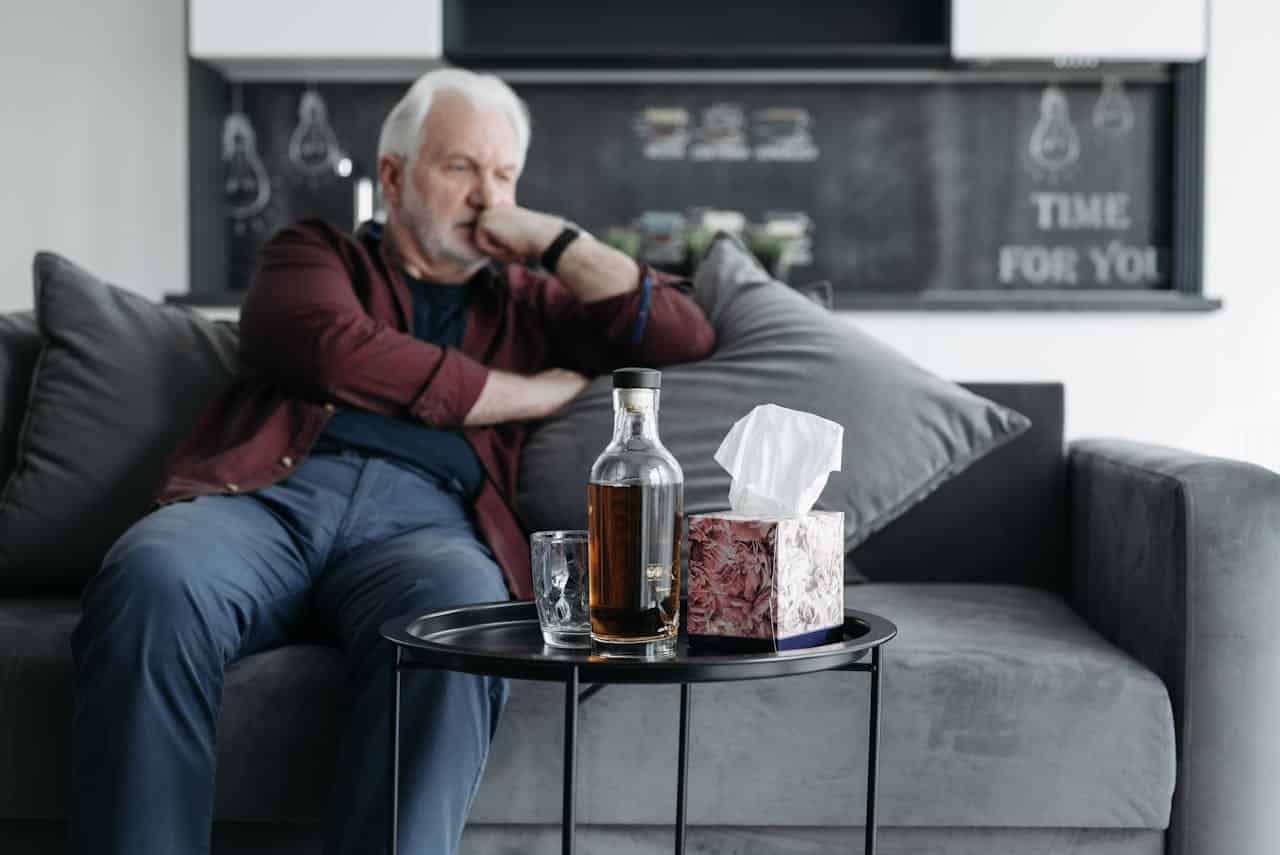
Alcohol and anxiety create a harmful neurochemical cycle where drinking provides temporary GABA-mediated relief but triggers worse rebound anxiety within 24-72 hours, requiring evidence-based therapy like CBT to break the dependency pattern and develop healthier coping strategies.
That drink you're reaching for to calm your nerves is actually rewiring your brain to be more anxious. The alcohol and anxiety cycle creates a neurochemical trap where temporary relief leads to days of heightened panic and worry.
How alcohol affects anxiety: The brain chemistry you don’t see
When you take that first drink, it feels like your nervous system finally exhales. Your shoulders drop, your racing thoughts slow down, and the tight knot in your chest loosens. This isn’t just in your head. Alcohol directly targets the same brain systems that regulate anxiety, creating a chemical shift that feels like genuine relief.
Here’s what’s actually happening: alcohol floods your brain with activity in a neurotransmitter called GABA, which acts like your nervous system’s brake pedal. GABA slows down brain activity, creating feelings of calm and relaxation. At the same time, alcohol suppresses glutamate, the accelerator neurotransmitter that keeps you alert and responsive. This one-two punch is why that drink feels like it melts away your worries, especially if you’re someone who experiences anxiety disorders or chronic stress.
Your brain isn’t passive in this process. It notices the artificial flood of calming chemicals and starts making adjustments. Within hours of regular drinking, your brain begins producing less natural GABA and ramping up glutamate production to compensate. Think of it like your brain trying to maintain equilibrium on a seesaw. When alcohol tips the balance toward relaxation, your brain adds weight to the anxiety side to level things out.
This is where the real problem begins. Once the alcohol leaves your system, you’re left with a brain that’s now primed for anxiety. You have less of the calming GABA than you started with and more of the excitatory glutamate. Research on GABA and glutamate neurotransmitter systems shows this rebound effect isn’t psychological or a matter of willpower. It’s a measurable neurochemical shift that leaves your anxiety response system more sensitive than before you drank.
The calm you borrowed from that drink gets repaid with interest. Regular drinking progressively dysregulates your brain’s natural ability to manage anxiety, creating a cycle where you need more alcohol to achieve the same temporary relief. What started as an effective short-term solution becomes the thing that makes your baseline anxiety worse.
The 72-hour anxiety timeline: What’s happening in your brain after drinking
Your brain doesn’t just bounce back the morning after drinking. The neurochemical changes triggered by alcohol follow a predictable pattern over three days, creating waves of anxiety that peak and recede as your brain chemistry struggles to rebalance. Understanding this timeline helps you recognize what’s happening in your body and why you might feel worse on day two than you did during the actual hangover.
Hours 0-8: The calm before the storm
During your first drink, alcohol floods your brain with GABA, the neurotransmitter responsible for calming neural activity. This is why you feel relaxed, why conversations flow easier, and why that knot of worry in your chest seems to dissolve. Your anxiety genuinely decreases in these early hours. Social inhibitions lower, and if you’ve been using alcohol to cope with stress, this temporary relief reinforces the pattern.
Your brain interprets this GABA surge as a problem that needs fixing. To maintain balance, it starts ramping up glutamate production, the excitatory neurotransmitter that keeps you alert and reactive. By hour four to eight, even if you’ve fallen asleep, this glutamate surge begins disrupting your rest. According to research on sleep disruption and REM suppression, alcohol prevents you from entering deep, restorative sleep cycles, leaving you restless even when unconscious. Your body temperature regulation gets thrown off, which is why you might wake up sweating or shivering.
Hours 8-24: When hangxiety peaks
This is when most people experience the worst of it. Your cortisol levels spike significantly as your body treats the alcohol withdrawal like a stress event. You wake up with a racing heart, intrusive thoughts about things you said last night, or a vague sense of dread that feels completely disproportionate to reality. These aren’t just psychological reactions. Your brain chemistry has swung hard in the opposite direction from the night before’s artificial calm.
The anxiety symptoms you experience during this window can include physical panic sensations like chest tightness, difficulty breathing, or feeling like something terrible is about to happen. Shame spirals often begin here too, especially if you have existing anxiety. Your brain is both chemically primed for anxious thoughts and searching for reasons to explain why you feel so awful. This combination makes everything feel more catastrophic than it actually is.
Hours 24-72: Recovery and what influences it
Between 24 and 48 hours after drinking, your serotonin levels hit their lowest point. This is when depression symptoms often emerge alongside lingering anxiety. You might feel flat, hopeless, or unable to experience pleasure from things that normally bring you joy. Crying spells, irritability, and social withdrawal are common during this phase. Many people don’t connect these feelings to the alcohol from two days ago, but the neurochemical connection is direct.
Gradual rebalancing begins around the 48 to 72-hour mark for occasional drinkers. Your neurotransmitter levels start normalizing, and the emotional weight begins to lift. If you drink regularly, your baseline never fully recovers between sessions. Your brain stays in a state of constant compensation, which is why people who drink frequently often feel a low-grade anxiety even on days they don’t drink.
You can support your brain during specific phases of this timeline. When cortisol spikes in hours 12 to 24, slow breathing exercises help activate your parasympathetic nervous system. During the serotonin dip at 24 to 48 hours, gentle movement like walking can boost mood-regulating chemicals without overtaxing your depleted system. If symptoms persist beyond 72 hours or feel unmanageable at any point, that’s a signal to reach out for professional support rather than waiting it out.
The harmful cycle between alcohol and mental health
The relationship between alcohol and anxiety doesn’t move in just one direction. It creates a self-reinforcing loop that becomes harder to break with each repetition. You might drink to calm your nerves before a social event, feel temporary relief, then wake up the next day with heightened anxiety that makes you more likely to reach for alcohol again. This co-occurrence of anxiety and alcohol use disorders creates a complex clinical pattern that many people don’t recognize until they’re caught in it.
What makes this cycle particularly insidious is how it rewires your brain over time. Each time you use alcohol to manage anxious feelings, you strengthen the neural pathway connecting alcohol with anxiety relief. Your brain learns to expect this solution, even as the actual outcomes get worse. Research on the bidirectional relationship between alcohol and anxiety shows that this pattern reinforces itself at a neurological level, making the association feel more automatic with each repetition.
The cycle also escalates in two troubling ways. First, tolerance develops. You need more alcohol to achieve the same calming effect you once got from a single drink. Second, the rebound anxiety intensifies. The nervous system adaptation that causes next-day anxiety becomes more pronounced, creating worse symptoms than you started with.
The social anxiety trap
One of the most common ways this cycle takes hold is through social situations. If you regularly use alcohol to feel comfortable at parties, meetings, or dates, you’re stepping into what researchers call the social anxiety trap. You might think you’re managing your social anxiety, but you’re actually preventing yourself from developing genuine social confidence.
The social skills and ease you experience while drinking don’t transfer to sober situations. This phenomenon, called state-dependent learning, means your brain files away “how to be confident at parties” under “things I can do when I’ve had a few drinks.” When you’re sober, you can’t access those same feelings or behaviors. You haven’t actually practiced being comfortable in social settings. You’ve practiced being comfortable while intoxicated.
Over time, this creates a dependency that has nothing to do with your actual social abilities. You’re not inherently bad at socializing or fundamentally awkward. You’ve simply outsourced your confidence to a substance, and your brain hasn’t had the chance to build those neural pathways on its own. Breaking this pattern means recognizing that the skills were never in the alcohol. They’re in you, waiting to be developed without chemical assistance.
Alcohol and depression: The connection you can’t ignore
Alcohol is a central nervous system depressant, which means it literally slows down brain function. When you drink regularly, alcohol interferes with the production and regulation of serotonin, dopamine, and other neurotransmitters that keep your mood stable. Over time, your brain becomes less capable of producing these chemicals on its own, leaving you vulnerable to depression even when you’re not drinking.
The relationship between alcohol, depression, and anxiety is particularly complex because these conditions share overlapping neurobiological mechanisms. Depression and anxiety frequently occur together, and alcohol worsens both through the same neurotransmitter disruptions. If you’re already experiencing symptoms of one condition, alcohol can amplify the other, creating a cycle that’s difficult to break. The temporary relief you might feel from drinking is often followed by intensified symptoms of both anxiety and low mood.
One of the most challenging aspects of alcohol-related depression is distinguishing it from clinical depression that exists independently. Mental health professionals often recommend a period of sobriety, typically two to four weeks, to see if depressive symptoms improve. If your mood lifts significantly after stopping drinking, the alcohol itself was likely the primary culprit. This doesn’t mean your suffering wasn’t real, but it does suggest that addressing your drinking may be the most effective path forward.
Alcohol also disrupts sleep architecture, fragmenting the deep, restorative stages your brain needs to regulate mood. Even if you’re getting enough hours in bed, the quality is compromised. Chronic sleep debt is a significant risk factor for depression, creating yet another pathway through which alcohol undermines your mental health.
Many people turn to alcohol to self-medicate depression, which creates a dangerous masking effect. You might feel temporary relief, but you’re actually delaying proper treatment while the underlying condition worsens. The alcohol becomes a barrier between you and the support that could actually help.
Long-term effects of alcohol on mental health: Beyond hangxiety
When you drink regularly over months or years, alcohol doesn’t just give you temporary hangxiety. It physically reshapes your brain in ways that fundamentally change how you think, feel, and respond to stress.
Research shows that consistent heavy drinking affects two critical brain regions. The prefrontal cortex, which handles decision-making and impulse control, begins to shrink with regular alcohol exposure. The hippocampus, essential for memory formation and emotional regulation, also shows measurable structural changes. These aren’t abstract concepts. They translate to real-world struggles like making poor decisions under stress, forgetting important conversations, or feeling emotionally reactive in situations that wouldn’t have bothered you before.
The encouraging news: neuroplasticity works both ways. Your brain can heal and rebuild these structures with sustained sobriety. The challenging reality is that this recovery takes months to years, not weeks. Brain imaging studies show that some structural changes begin reversing within weeks of stopping drinking, while others require a year or more of abstinence to normalize.
People who drink regularly face significantly higher rates of anxiety disorders compared to those who don’t. Generalized anxiety disorder, panic disorder, and social anxiety all become more common with consistent alcohol use. The same pattern emerges with mood disorders like depression, where alcohol initially seems to help but ultimately deepens the problem.
Your emotional regulation capacity also diminishes with regular drinking. Small frustrations that you’d normally brush off start triggering disproportionate emotional responses. A minor work email might send you spiraling. A friend canceling plans might feel devastating. This isn’t weakness or overreaction. It’s your hippocampus and prefrontal cortex struggling to do their jobs after prolonged alcohol exposure.
Studies using brain imaging reveal a concerning threshold: people consuming 14 or more drinks per week begin showing measurable brain structure changes. That’s two drinks per day, an amount many consider moderate. Over decades, even drinking at or below this threshold produces mental health impacts that single hangovers never reveal. The cumulative effect builds silently, reshaping your brain’s architecture one drink at a time.
Your personal alcohol-anxiety threshold: How much is too much for you
The standard advice to “drink in moderation” ignores a fundamental truth: your personal threshold for alcohol-induced anxiety is as unique as your fingerprint. What leaves your friend feeling fine might send your nervous system into a tailspin for days. Understanding your individual vulnerability factors helps you make informed decisions rather than following one-size-fits-all guidelines that may not protect your mental health.
Biological factors that increase your vulnerability
Your genetic makeup plays a significant role in how alcohol affects your anxiety levels. Variants in genes that control alcohol metabolism, particularly ADH and ALDH, determine how quickly your body processes alcohol and its anxiety-triggering byproducts. If you have a family history of anxiety disorders or alcoholism, you’re dealing with a double vulnerability. Your brain chemistry may already predispose you to anxiety, and you may have inherited genes that make alcohol’s effects on your nervous system more pronounced.
Gender creates another layer of difference. Women metabolize alcohol more slowly than men due to lower levels of the enzyme alcohol dehydrogenase in the stomach. This means reaching higher blood alcohol concentrations from the same number of drinks, and experiencing a more dramatic anxiety rebound as levels drop. The hormonal shifts of the menstrual cycle add yet another variable. During the luteal phase (the week or two before your period), the brain is already more sensitive to anxiety triggers, and alcohol amplifies this vulnerability.
If you take medications, you’re working with an entirely different equation. SSRIs, benzodiazepines, birth control pills, and many common medications alter how your body processes alcohol and how alcohol affects your brain chemistry. Some combinations increase sedation followed by more severe rebound anxiety. Others reduce your ability to gauge how intoxicated you are, leading you to drink more than intended.
Your baseline anxiety level matters more than most people realize. If you’re starting with anxiety already at a 6 out of 10, drinking alcohol is like borrowing calm from an account that’s already overdrawn. The payback will be steeper and more painful.
The pre-drink decision framework
Before you have that first drink, run through these five questions. They create a personalized risk assessment based on your current state, not generic guidelines.
First: Is my anxiety currently above 6 out of 10? If you’re already feeling significantly anxious, alcohol will provide temporary relief followed by amplified anxiety.
Second: Have I had poor sleep this week? Sleep deprivation already dysregulates your stress response system. Adding alcohol to an exhausted nervous system compounds the problem and makes anxiety rebound more severe.
Third: Am I in a high-stress period? When you’re dealing with work deadlines, relationship conflicts, or major life changes, your cortisol levels are already elevated. Alcohol adds another stressor your body has to process.
Fourth: Am I taking any medications? Check interactions not just for safety, but for how they might intensify anxiety effects. Even over-the-counter antihistamines can change the equation.
Fifth: Do I have important obligations tomorrow? If you need to be mentally sharp or emotionally regulated the next day, consider whether the anxiety rebound is worth the risk. The cognitive fog and emotional sensitivity can last well beyond the physical hangover.