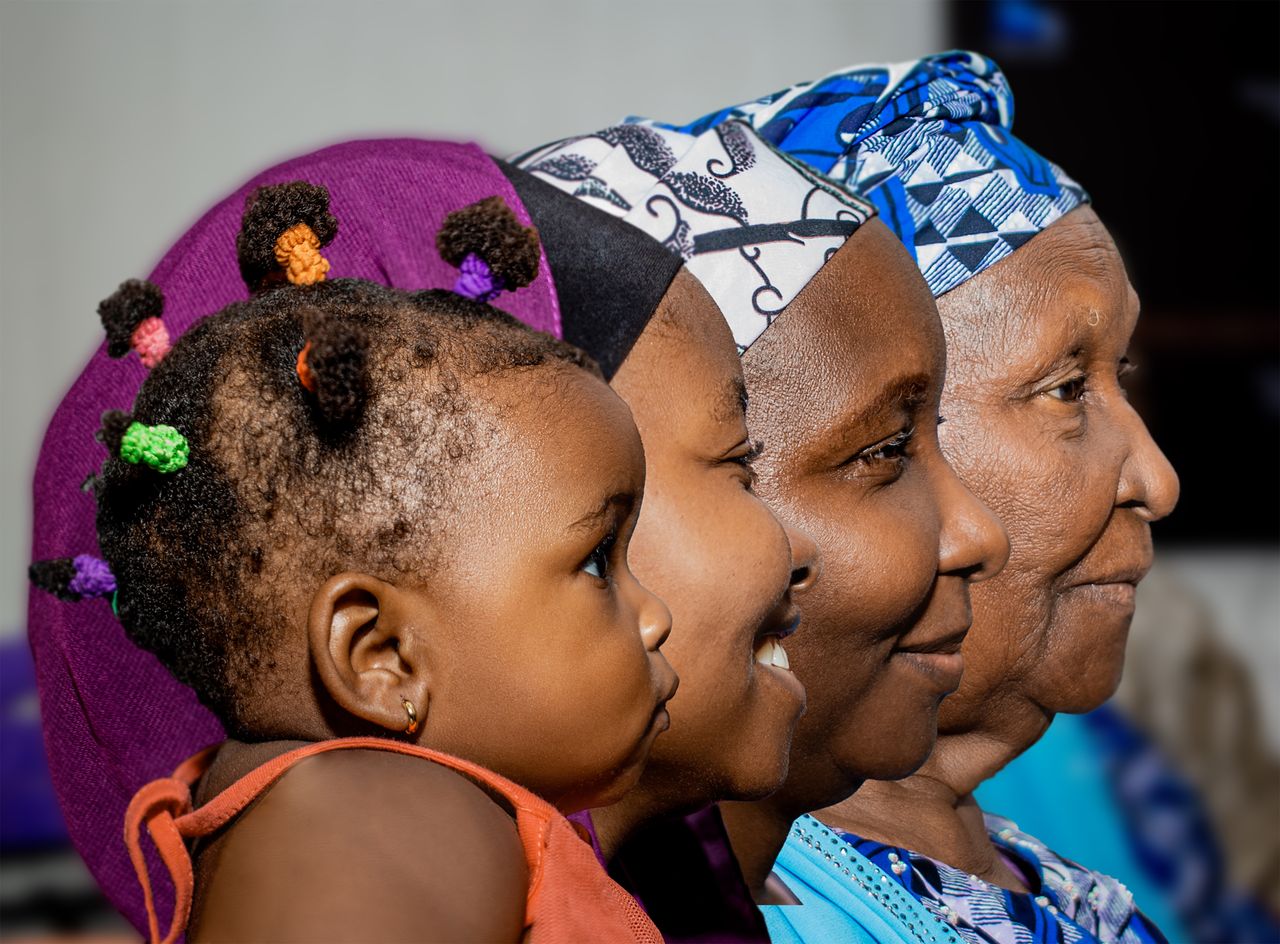
Developmental psychology maps how cognitive, emotional, moral, and social growth unfold across every life stage, from infancy through late adulthood, and because the brain retains neuroplasticity throughout life, a licensed therapist can help individuals work through unresolved patterns and challenges at any age.
What if the struggles you're facing right now aren't signs something is wrong with you, but exactly what this stage of life demands? Developmental psychology shows that growth never stops at any age, and understanding where you are in the human lifespan can replace self-blame with real clarity and compassion.
What is developmental psychology?
Developmental psychology is the scientific study of how people change, and what stays the same, across the entire human lifespan. It begins at conception and follows human experience all the way through death. This field does not simply ask “what happens at each age?” It asks why those changes occur, what drives them, and how earlier experiences shape what comes later.
The scope of the field is broad by design. Researchers study how thinking and memory evolve (cognitive development), how people learn to understand and manage emotions (emotional development), how relationships form and shift over time (social development), and how the body itself changes from infancy through old age. Moral reasoning, language, identity, and personality all fall within its reach as well.
One of the most significant shifts in modern developmental psychology is the rejection of a childhood-only view. For much of its early history, the field treated adulthood as a kind of finish line. That framing no longer holds. Researchers now recognize that meaningful development continues through adolescence, midlife, and late adulthood in ways that are just as complex and consequential as anything that happens in the first years of life.
Explaining these changes is not simple, and no single theory does it alone. Several major theoretical frameworks compete and complement each other to make sense of the full arc of human development.
The major theories of human development
No single theory explains everything about how humans grow and change. Developmental psychology draws from a set of complementary frameworks, each illuminating a different dimension of human experience. Six theorists in particular shaped the field most profoundly.
Erik Erikson proposed that development unfolds across eight psychosocial stages, from infancy through late adulthood. Each stage centers on a core conflict, such as trust versus mistrust in infancy, or integrity versus despair in old age. How you resolve each conflict shapes your personality and prepares you, or leaves you less prepared, for what comes next.
Jean Piaget focused on cognitive development, mapping how thinking itself changes in structure. His four stages, sensorimotor, preoperational, concrete operational, and formal operational, describe a progression from learning through physical sensation to reasoning in abstract terms. A toddler and a teenager are not just different in knowledge; they think in fundamentally different ways.
Lev Vygotsky argued that development cannot be separated from social and cultural context. His concept of the Zone of Proximal Development refers to the gap between what a person can do alone and what they can do with guidance, highlighting how learning is always a collaborative process shaped by the people and culture around you.
Lawrence Kohlberg traced how moral reasoning develops through three broad levels: pre-conventional (rules exist to avoid punishment), conventional (rules maintain social order), and post-conventional (principles transcend rules). His work explains why a six-year-old and a forty-year-old can look at the same situation and reach very different ethical conclusions.
Urie Bronfenbrenner widened the lens further with his ecological systems model. Development, he argued, happens within nested layers of environment: the microsystem (family, school), the mesosystem (connections between those settings), the exosystem (community structures), the macrosystem (cultural values), and the chronosystem (the dimension of time and historical change).
Jeffrey Arnett identified a gap in earlier frameworks. The period between ages 18 and 25, which he called emerging adulthood, is neither adolescence nor full adulthood. As comparative research on lifespan models has noted, Erikson’s model underserves this phase, and Arnett’s work fills that space with a stage defined by identity exploration, instability, and possibility.
One important caveat applies to all six frameworks: most were developed using WEIRD populations, a shorthand for Western, Educated, Industrialized, Rich, and Democratic. This limits how universally their conclusions can be applied across cultures.
The integrated lifespan matrix: what six theorists say happens at each stage
To understand how humans develop from birth to death, you need to hold multiple lenses at once. The frameworks below, Erikson’s psychosocial stages, Piaget’s cognitive development, Vygotsky’s sociocultural theory, Kohlberg’s moral development, Bronfenbrenner’s ecological systems model, and Levinson’s seasons of adult life, each illuminate something the others miss.
Infancy and early childhood
- Erikson: Trust vs. mistrust, then autonomy vs. shame, establishing foundational emotional security
- Piaget: Sensorimotor and preoperational thinking, learning through sensation, then symbols
- Vygotsky: Language and play as the first scaffolding tools for cognitive growth
- Kohlberg: Pre-conventional morality begins, with rules existing to avoid punishment
- Bronfenbrenner: Family microsystem is the dominant shaping force
Middle childhood and adolescence
This is where theorists converge most clearly. Erikson’s industry vs. inferiority and identity vs. role confusion align tightly with Piaget’s concrete and formal operational thinking, and with Kohlberg’s shift toward conventional morality, following rules to belong. Levinson identifies adolescence as the first life structure transition. Nearly every framework treats this period as pivotal.
Emerging and early adulthood
- Erikson: Intimacy vs. isolation, building close relationships
- Levinson: Entering the adult world and the age-30 transition
- Bronfenbrenner: Work and partnership systems grow in influence
- Piaget and Kohlberg: Both models effectively stop here, a significant gap
Middle and late adulthood
Piaget’s model ends at formal operations in adolescence, and Kohlberg’s research drew heavily from younger male samples, leaving adulthood underexplored in both frameworks. Erikson and Levinson carry the weight here. Generativity vs. stagnation and ego integrity vs. despair map onto Levinson’s middle adulthood and late adult transition seasons, showing that growth, and struggle, continue until death. Where theorists diverge matters as much as where they agree. Those gaps are not failures; they are invitations to look deeper.
Middle childhood (ages 6–12): cognitive leaps, industry vs. inferiority, and peer development
The school-age years are one of the most cognitively active periods in human development. The brain undergoes cortical thickening that peaks around ages 8 to 10, followed by synaptic pruning that sharpens neural efficiency. Myelination of the corpus callosum, the thick band of fibers connecting the brain’s two hemispheres, accelerates cross-hemispheric communication, making complex reasoning and coordination noticeably faster. These biological changes set the stage for the dramatic cognitive and social leaps that define this period, as documented in developmental milestones across cognitive and social domains.
Piaget called this the concrete operational stage, when children develop conservation (understanding that quantity stays the same despite changes in appearance), reversibility, and classification. For the first time, logical reasoning becomes reliable, though it stays anchored to tangible, real-world problems rather than abstract ideas. Vygotsky’s Zone of Proximal Development, the gap between what a child can do alone and what they can do with guidance, becomes most visible in classrooms, where teachers and peers scaffold new skills through structured support.
Erikson framed this stage as industry vs. inferiority: children need to experience genuine competence through mastering skills, whether reading, math, or sports. Repeated failure without adequate support can plant seeds of lasting self-doubt, and in some cases contributes to the development of mood disorders later in life. Kohlberg observed a parallel moral shift during these years, as children move from rule-following driven purely by self-interest toward a more nuanced understanding of fairness and social expectations.
Peer relationships become the dominant arena for social learning by middle childhood. Rejection or bullying during this window carries measurable long-term mental health consequences, making the social environment of school just as formative as the academic one.
Developmental psychology has long treated the teenage years as a single, unified stage. That framing is increasingly hard to defend. The period between 13 and 25 actually contains two distinct developmental chapters, each with its own psychological demands, neurological realities, and cultural conditions.
Erikson placed identity vs. role confusion at the center of adolescence, and the framing holds up well. The central task is building a coherent self-concept across three domains: sexual identity, vocational direction, and ideological belief. At the same time, Piaget’s formal operational stage arrives, bringing abstract reasoning, hypothetical thinking, and metacognition, the ability to think about your own thinking. These capacities are real, but they are not yet stable.
The neuroscience adds a critical layer. The limbic system, which drives reward-seeking and emotional reactivity, matures significantly earlier than the prefrontal cortex, which handles impulse regulation and long-term planning. This structural mismatch peaks around ages 15 to 17 and helps explain why adolescents take risks that seem baffling to adults. It also helps explain why identity confusion during this period can tip into anxiety during adolescence, a common outcome when the pressure to define oneself outpaces the brain’s capacity to regulate the stress that comes with it. Kohlberg’s research adds another dimension: conventional moral reasoning deepens during adolescence, and some teens begin showing post-conventional reasoning, weighing principles over rules.
Emerging adulthood (ages 18–25): why Erikson underserved this stage
Erikson’s model moves from identity directly into intimacy vs. isolation in early adulthood, which essentially skips over the 18 to 25 window entirely. Jeffrey Arnett’s longitudinal research identified why that skip is a problem. He found that this period has its own signature features: ongoing identity exploration, high instability, intense self-focus, a persistent sense of being “in between,” and a feeling that life’s possibilities are still wide open. Large-scale empirical evidence on identity status variation across adolescence and emerging adulthood confirms that identity work continues actively into the mid-20s across both educational and occupational contexts, rather than resolving at 18 as Erikson’s framework implies.
The brain supports this picture. Prefrontal cortex myelination, the process that insulates neural pathways and speeds up communication, continues into the mid-20s. The default mode network, which governs self-referential thinking, becomes more active during this period, reflecting the inward focus that Arnett’s research describes.
The WEIRD problem: is emerging adulthood universal or culturally constructed?
Arnett’s model comes with a significant caveat. The acronym WEIRD stands for Western, Educated, Industrialized, Rich, and Democratic, and it describes the populations that most developmental research has drawn from. Emerging adulthood as a distinct stage depends on economic and social conditions that delay entry into adult roles: extended education, late marriage, and deferred financial independence. In many non-Western societies, full adult responsibilities begin at or shortly after puberty. That means the 18 to 25 stage Arnett describes may be a product of cultural circumstance as much as biology, and applying it universally requires real caution.
Early and middle adulthood (ages 26–65): intimacy, generativity, and the midlife recalibration
Adulthood is not a developmental plateau. Research confirms that identity development remains a dynamic, ongoing process through midlife, meaning the psychological work of these decades is just as real as anything that happens in childhood or adolescence.
Erikson’s two adult conflicts
In early adulthood, Erikson identified the central tension as intimacy vs. isolation: the capacity to form deep, committed relationships with others. This is not just about romantic partnerships. It includes close friendships, professional bonds, and community ties. The catch is that genuine intimacy requires a reasonably stable sense of self first. People who skipped or rushed through adolescent identity work often find themselves struggling to truly connect, defaulting instead to surface-level relationships or emotional withdrawal.
Middle adulthood shifts the focus outward. Erikson called this stage generativity vs. stagnation: the drive to contribute something meaningful to future generations. That contribution can take many forms, including raising children, mentoring colleagues, building institutions, or civic engagement. Longitudinal research shows that how well adults navigate this conflict has measurable effects on cognitive and emotional health decades later, making generativity far more than a philosophical concept.
What’s happening in the brain and mind
Two types of intelligence follow different trajectories across this span. Fluid intelligence, which covers processing speed and novel problem-solving, begins a gradual decline after around age 30. Crystallized intelligence, meaning accumulated knowledge, vocabulary, and expertise, keeps rising well into the 60s. So while you may solve a new puzzle more slowly at 55, you bring far more context and judgment to it.
Neurologically, white matter volume peaks in the 40s and 50s, supporting the kind of complex, integrative thinking that draws on multiple brain regions at once. Hippocampal volume begins a slow decline, and neuroplasticity continues but demands more deliberate effort to activate.
The midlife crisis, as popularly imagined, is largely a myth. Longitudinal studies consistently show no spike in psychological crisis at midlife. What does exist is a U-shaped happiness curve, with a low point around ages 45 to 50, followed by a meaningful recovery. Adults in this period are also navigating what Bronfenbrenner’s ecological model captures well: simultaneous demands from workplace, family, community, and broader political systems, all interacting in ways that shape development.
If you’re navigating a transition in early or middle adulthood and want to talk it through, you can connect with a licensed therapist on ReachLink. It’s free to get started, with no commitment required.
Late adulthood (ages 65+): integrity vs. despair, wisdom, and the psychology of aging
Erikson’s eighth and final stage asks a profound question: when you look back at your life, does it feel like it mattered? Older adults who can find coherence and meaning in their lived experience arrive at what Erikson called ego integrity, a settled sense of acceptance. Those who fixate on roads not taken, or feel their life was wasted, slide into despair. Research confirms that how well people resolved the generativity stage in midlife is one of the strongest predictors of which outcome they reach, reinforcing that no life stage exists in isolation.
Wisdom, far from being a romantic idea, has a rigorous scientific definition. Paul Baltes’s Berlin Wisdom Paradigm describes it as expert knowledge about the fundamental pragmatics of life, meaning deep insight into human nature, uncertainty, and what makes a life well-lived. Crucially, research shows wisdom can continue growing into a person’s 70s, directly challenging the assumption that old age is purely a story of loss.
Laura Carstensen’s socioemotional selectivity theory adds another layer: as people perceive their time horizon as shorter, they naturally shift priorities toward emotionally meaningful relationships and away from novelty-seeking. This is an adaptive strategy, not withdrawal.
On the neuroscience side, hippocampal atrophy affects episodic memory, the recall of specific past events, and prefrontal thinning can slow executive function. The brain compensates through what the HAROLD model documents: older adults recruit bilateral brain activation, drawing on both hemispheres to maintain cognitive performance. Forgetting where you put your keys is normal aging. Persistent confusion about people, places, or time warrants professional evaluation. Popular media routinely conflates the two, which causes unnecessary fear. Longitudinal evidence shows that late-life cognitive and emotional health is meaningfully shaped by how earlier developmental challenges were met, not simply by the passage of time.
Culture shapes this stage profoundly. In societies that venerate elders, late adulthood carries social prestige and purpose. In youth-oriented Western cultures, the same years can bring invisibility and marginalization, a difference driven by values, not biology.
When development goes sideways: regression, fixation, and non-linear pathways
Stage models make development look tidy on paper, but real life rarely follows a straight line. Under stress, grief, or trauma, people often slip back into earlier coping strategies, such as a grieving adult who stops eating independently, or a high-achieving professional who becomes clingy and approval-seeking during a divorce. This backward movement is called regression, and it is a normal, if uncomfortable, part of being human.
The concept of fixation has roots in Freudian theory, but modern developmental psychology has updated it meaningfully. When core developmental tasks go unresolved at a given stage, the patterns don’t disappear; they resurface later. Insecure attachment formed in infancy, for example, reliably predicts relationship difficulties in adulthood. Research on developmental disruption confirms that unresolved early-stage challenges carry forward as measurable behavioral and emotional risk factors across the lifespan.
Adverse Childhood Experiences (ACEs) research adds another layer. Childhood trauma doesn’t just affect childhood; its effects on physical and mental health are dose-dependent, meaning more early adversity correlates with worse outcomes decades later. Transition zones between stages, like adolescence to adulthood or midlife to late adulthood, are especially vulnerable periods where identity is less stable and mental health risks peak. Adjustment disorders often emerge precisely at these crossroads.
Resilience research complicates this picture in an important way. Many people with significant early adversity still reach healthy developmental outcomes, particularly when at least one stable, responsive caregiver relationship was present. Neuroplasticity research confirms the brain remains modifiable throughout life, which means developmental disruptions can be addressed at any age through therapy.
If you’re recognizing patterns from earlier life stages that still affect you today, you can take a free assessment to explore support options and get matched with a licensed therapist, at your own pace, with no commitment.
Key takeaways: what developmental psychology means for your life
Development does not stop at any age. Every stage you move through, from infancy to late adulthood, adds to who you are, but no single stage defines you permanently. Cognitive, social, moral, emotional, and neurobiological growth all unfold at the same time, shaping and reshaping each other in ways that make your development uniquely yours.
Stage models are useful maps, not rigid rules. Your own path may skip, revisit, or blur certain stages, and that is entirely normal. Cultural background also plays a real role: the tasks and milestones that feel significant are shaped by the community and context you grew up in.
Perhaps the most freeing insight developmental psychology offers is this: many of the struggles you face are stage-appropriate, not personal failures. Recognizing where you are developmentally can ease self-blame and build genuine self-compassion. And because the brain retains neuroplasticity, the ability to change and adapt, across the lifespan, it is never too late to revisit unresolved challenges and grow through them with the right support.
You Have Always Been in the Middle of Becoming
If anything in this article stirred something in you, that recognition is worth sitting with. Understanding the stages every human moves through from birth to death is not just an academic exercise. It can reframe struggles you have carried quietly as normal, even necessary, parts of being human. The patterns that feel most personal often turn out to be deeply universal.
And because the brain remains capable of change at every age, nothing you have read here closes a door. If you are curious about how your own developmental history might connect to what you are experiencing now, you can explore support options for free on ReachLink, with no commitment, at whatever pace feels right for you.
FAQ
-
Why do people change so much as they go through different life stages?
Human development is a continuous process shaped by biological changes, social experiences, and the environments we move through over time. Each life stage - from childhood and adolescence through adulthood and old age - brings new psychological challenges that can reshape how we see ourselves and relate to others. These shifts are not signs of instability, but rather a natural part of growing and adapting. Understanding that change is built into every stage of life can help reduce the shame or confusion that often comes with feeling different than you used to be.
-
Can therapy actually help me work through a major life transition?
Yes, therapy can be genuinely helpful during life transitions because many of the struggles people face - grief, identity confusion, anxiety, relationship strain - respond well to evidence-based approaches like CBT (cognitive behavioral therapy) or talk therapy. A licensed therapist can help you process what you're experiencing, identify patterns that may be holding you back, and develop practical coping strategies. Many people find that having a consistent, supportive space to think out loud makes transitions feel far less overwhelming. If you're navigating a significant life change, reaching out to a therapist sooner rather than later can make a meaningful difference.
-
Is it normal for teenagers to feel like their identity keeps changing all the time?
Absolutely - shifting identity is one of the most documented and normal features of adolescence. During the teenage years, the brain is actively developing the regions responsible for decision-making, emotional regulation, and self-concept, which means a teen's sense of who they are can feel unstable or contradictory from one week to the next. Psychologist Erik Erikson called this "identity versus role confusion," describing adolescence as a stage defined by the search for a stable sense of self. If the identity shifts feel distressing or are accompanied by anxiety, withdrawal, or mood changes, talking with a therapist who specializes in adolescent development can provide real support.
-
I feel stuck in a life stage transition - where do I even start looking for a therapist?
Starting is often the hardest part, but you don't need to figure it all out on your own. ReachLink makes it easier by connecting you with a licensed therapist through a human care coordinator - a real person who takes time to understand your situation rather than relying on an algorithm to match you. You can begin by taking a free assessment, which helps the care team understand where you are in your journey and what kind of therapeutic support would be most helpful. From there, you'll be matched with a therapist who fits your specific needs, and sessions take place online so you can start from wherever you are.
-
Do the same mental health challenges keep showing up at every life stage, or are they all different?
Mental health challenges do tend to follow patterns across life stages, but the way they show up can look quite different depending on where someone is in their development. For example, anxiety in a teenager might look like school avoidance or social withdrawal, while anxiety in a middle-aged adult might show up as chronic stress about work, parenting, or health. Some underlying themes - like fear of failure, difficulty with relationships, or low self-worth - can persist across multiple stages if left unaddressed. Therapy offers a way to explore these recurring patterns and understand how early experiences continue to shape present-day thinking and behavior.