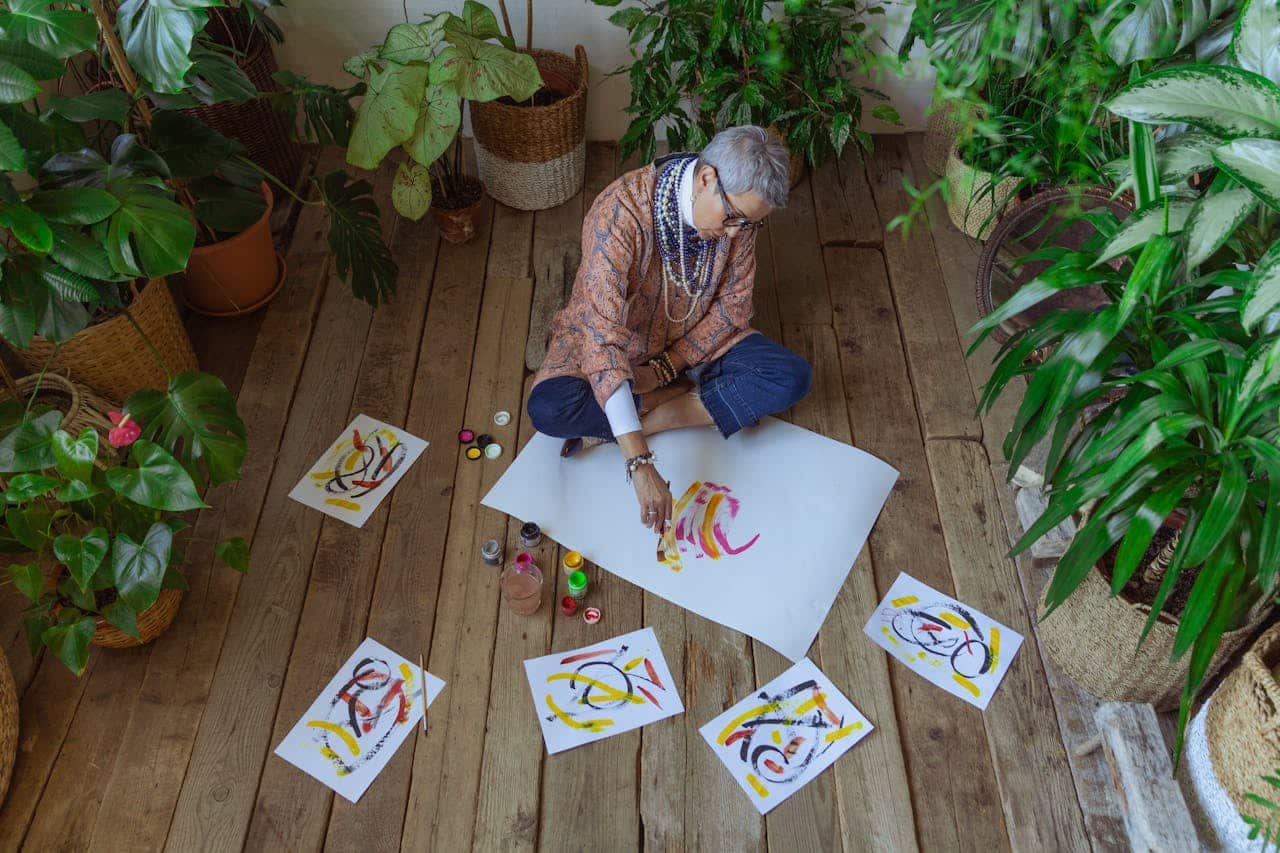
Play therapy for adults accesses nonverbal memory systems and trauma responses that traditional talk therapy cannot reach, using structured therapeutic techniques to process emotions and experiences stored in the body through symbolic expression and neurobiologically-informed interventions.
Most adults dismiss play therapy as childish make-believe, but this scientifically-backed therapeutic approach accesses deep trauma and emotions locked in your nervous system that traditional talk therapy alone simply cannot reach.
What is play therapy?
Play therapy is a structured psychotherapeutic approach that uses play as the primary mode of communication between client and clinician. Unlike recreational play, it is a clinical intervention guided by a trained therapist who creates a safe, intentional space for exploration and healing. The toys, materials, and activities are not random. They are carefully selected tools that help you express thoughts and feelings that might be difficult to put into words.
The approach emerged in the early 20th century, initially developed for children who could not yet articulate complex emotions through traditional talk therapy. Pioneers like Virginia Axline and Melanie Klein recognized that play provided a natural language for young clients. Over decades, clinicians discovered that the therapeutic relationship formed through play created powerful opportunities for change, not just in children but across age groups. Today, play therapy is used with adults across diverse populations and theoretical orientations, from psychodynamic to cognitive-behavioral frameworks.
The core principle is simple but profound: play accesses nonverbal, implicit memory systems that talk therapy alone cannot reach. Your brain stores experiences in multiple ways. Some memories live in the part of your mind that processes language and conscious thought. Others, particularly traumatic or preverbal experiences, are encoded in sensory, emotional, and bodily systems. Play therapy engages these deeper layers, allowing you to process material that might remain hidden in conventional conversation.
This makes play therapy particularly compatible with trauma-informed care principles. The approach recognizes that healing does not always happen through words. Sometimes you need to move, create, or symbolically represent what you are experiencing. A trained play therapist knows how to read the language of play, offering reflections and interventions that facilitate growth without forcing verbal articulation before you are ready.
Why playing in therapy feels weird (and why that’s okay)
If the idea of playing with toys or art supplies in a therapy session makes you cringe a little, you are not alone. Most adults feel somewhere between skeptical and mortified when they first hear about play therapy. You might picture yourself sitting cross-legged with a dollhouse while a therapist watches, and think: this is ridiculous. I am a grown adult with a mortgage and a career. Why would I play pretend?
That reaction makes perfect sense. From childhood onward, you have been socialized to put away childish things. Play becomes something you do with kids at the park or watch athletes do on TV, not something serious adults do for their own wellbeing. Our culture reinforces the message that productivity, efficiency, and verbal articulation are what matter. Playing feels frivolous, unproductive, even embarrassing.
But here is the thing: that discomfort you are feeling is actually pointing toward exactly why play therapy works. When something feels vulnerable in therapy, it often means you are approaching emotional territory that regular conversation cannot quite reach. Your brain has spent years building sophisticated defenses through language. You can talk about your feelings, rationalize them, intellectualize them, and keep them at arm’s length. Play slips past those defenses.
From a neuroscience perspective, play activates different neural pathways than verbal processing does. It engages sensory, motor, and emotional systems simultaneously. When you feel that initial resistance or awkwardness, it is often a signal that the therapy is accessing something real, something your usual coping strategies have kept buried.
Most people who try play therapy move through a predictable arc. They start skeptical, feel self-conscious during early sessions, then find themselves unexpectedly engaged. The embarrassment fades. What emerges instead is relief at finally expressing things words could not capture. The weirdness becomes the point.
The neuroscience: How play rewires adult trauma responses
When you engage in play therapy, you are not just moving toys around or doing creative activities. You are activating specific brain structures that create the conditions for deep healing. The science behind why play works for adults involves several interconnected systems in your brain and nervous system, all working together to help you process experiences that talk therapy alone might not reach.
Polyvagal theory and the safety of play
Your nervous system constantly scans your environment for signs of safety or danger, a process called neuroception. According to polyvagal theory, play activates your ventral vagal system, the part of your nervous system associated with social engagement and feelings of safety. When you are in a playful state, your body receives a clear signal: you are safe enough to explore, experiment, and be vulnerable.
This matters because trauma often keeps your nervous system stuck in defensive modes of fight, flight, or freeze. Play creates a unique neurobiological state where you can approach difficult material without triggering a full threat response. Your heart rate variability increases, your breathing deepens, and your body shifts from protection mode to connection mode.
This physiological shift is not something you can simply decide to do through willpower. Play bypasses your conscious control and speaks directly to the parts of your nervous system that regulate safety and threat.
How play accesses implicit memory
Your brain stores memories in two distinct systems: explicit memory (things you can consciously recall and describe) and implicit memory (body-based memories, emotional responses, and patterns formed before you had language). Trauma, especially early trauma, often lives in your implicit memory system. You might not remember specific events, but your body remembers through tension, reflexive responses, or overwhelming emotions that seem to come from nowhere.
Play therapy works with implicit memory because it uses the same language: sensation, movement, and nonverbal expression. When you engage with sand, art materials, or symbolic objects in therapy, you are creating conditions where implicit memories can surface and be processed through the body and senses.
The hippocampus, a brain structure crucial for memory consolidation, plays a key role here. Trauma and chronic stress can impair hippocampal function, making it harder to integrate fragmented memories into a coherent narrative. Embodied play helps activate the hippocampus in a gentler way than verbal recounting, allowing traumatic memories to be reconsolidated with new information: that you survived, that you are safe now, that you have agency.
Expanding the window of tolerance
Your window of tolerance is the zone of arousal where you can process emotions and experiences effectively. When you are within this window, you can think clearly, feel your emotions without being overwhelmed, and respond flexibly to challenges. Trauma narrows this window. You might find yourself quickly swinging between feeling numb and shut down or feeling flooded and panicked.
Play therapy works by gently expanding your window of tolerance. The playful state keeps your arousal level in the therapeutic zone where processing can actually occur. You are engaged enough to work with difficult material but not so activated that your prefrontal cortex goes offline.
Over time, repeated play-based processing creates new neural pathways through neuroplasticity. Your brain literally rewires itself, building stronger connections between regions that regulate emotion and those that provide perspective and meaning. The protective responses that once served you but now limit you begin to soften, replaced by more flexible and adaptive patterns.
Who benefits most from adult play therapy
Play therapy is not for everyone, but certain groups of adults find it particularly effective. If you are wondering whether this approach might work for you, these profiles can help you decide.
When words are not enough
Some people feel stuck in traditional talk therapy. You might sit across from your therapist, know something is wrong, but struggle to put feelings into words. This experience is common for adults with alexithymia, a condition where identifying and describing emotions feels nearly impossible. Play therapy offers an alternative route. When you work with sand, clay, or art materials, you can express what lives beneath language. The emotions emerge through your hands rather than your voice.
Adults who experienced developmental or attachment trauma often fall into this category too. If your earliest wounds happened before you could speak, talking about them decades later can feel inadequate. Play therapy accesses those preverbal memories in ways that match how they were originally encoded.
Specific conditions that respond well
Adults with PTSD and complex PTSD frequently benefit from play therapy techniques. Trauma can lock experiences in your body and nervous system, making purely verbal processing incomplete. Through play, you can work with these somatic memories more directly.
People experiencing anxiety disorders and depression also find value in this approach, especially when their symptoms feel disconnected from specific thoughts or events. Play therapy helps you explore the emotional landscape underneath surface symptoms.
Who else finds it valuable
You might benefit from play therapy if you are processing grief, examining relationship patterns, or exploring identity questions. Creative individuals often prefer this modality because it aligns with how they naturally process information.
Adults who survived childhood adversity sometimes use play therapy to reconnect with suppressed parts of themselves. If you learned early to hide certain feelings or needs, play creates a safe space to rediscover them. The playroom becomes a place where you can finally express what was once too difficult to show.
Benefits of play therapy for adults
Play therapy offers adults specific, measurable outcomes that extend beyond what traditional talk therapy can achieve. These benefits emerge from the unique way play engages both mind and body, accessing material stored below the level of conscious awareness.
Emotional regulation and nervous system healing
One of the most immediate benefits adults experience is improved emotional regulation. During play, your nervous system naturally co-regulates with the therapist’s calm presence. This creates a safe container where you can explore intense feelings without becoming overwhelmed. Over time, this practice builds your capacity to manage emotions in daily life, particularly for people experiencing emotional regulation difficulties related to depression or past trauma.
Play therapy also accesses preverbal memories and implicit material that talk therapy cannot easily reach. Traumatic experiences, especially those from early childhood, are often stored in the body and nervous system rather than in narrative memory. Through sand tray work, art, or movement, you can process these experiences without needing to put them into words first.
Reduced shame through symbolic expression
Play creates what researchers call psychological distance through its “as if” quality. When you work with miniature figures or create art, you are exploring difficult material one step removed from direct confrontation. Research on symbolic distancing in play therapy shows this indirect approach significantly reduces shame and defensiveness, allowing you to engage with painful experiences you might otherwise avoid.
The metaphorical nature of play also increases self-awareness and insight. A sandtray scene or drawing can reveal patterns and feelings you were not consciously aware of, offering new perspectives on long-standing struggles.
Experiential learning and lasting change
Play therapy creates experiential learning rather than intellectual understanding. You are not just talking about healthier relationship patterns; you are practicing them in real time with your therapist through the play itself. This embodied learning leads to deeper, more lasting change. Play therapy also helps develop creativity, spontaneity, and the capacity for joy that trauma, anxiety, or depression often suppress, reconnecting you with parts of yourself that may have been dormant for years.
Common play therapy techniques for adults
Walking into a play therapy session for the first time, you might wonder what exactly you will be doing with all those art supplies, figurines, and sand trays. These are not random activities. Each technique serves a specific therapeutic purpose, giving you concrete ways to explore feelings and experiences that might feel stuck or hard to verbalize.
Your therapist will match techniques to your needs, preferences, and what you are working through. Some people gravitate toward hands-on creation, while others prefer movement or storytelling. The flexibility of play therapy means it can meet you where you feel most comfortable expressing yourself.
Sand tray and miniature work
Sand tray therapy involves creating scenes in a shallow box of sand using hundreds of miniature objects: people, animals, buildings, natural elements, and symbolic items. You might build a representation of your family dynamics, a recurring dream, or how anxiety feels in your body. The process of selecting figures and arranging them in sand helps you externalize internal experiences that feel too complex or overwhelming to simply talk about.