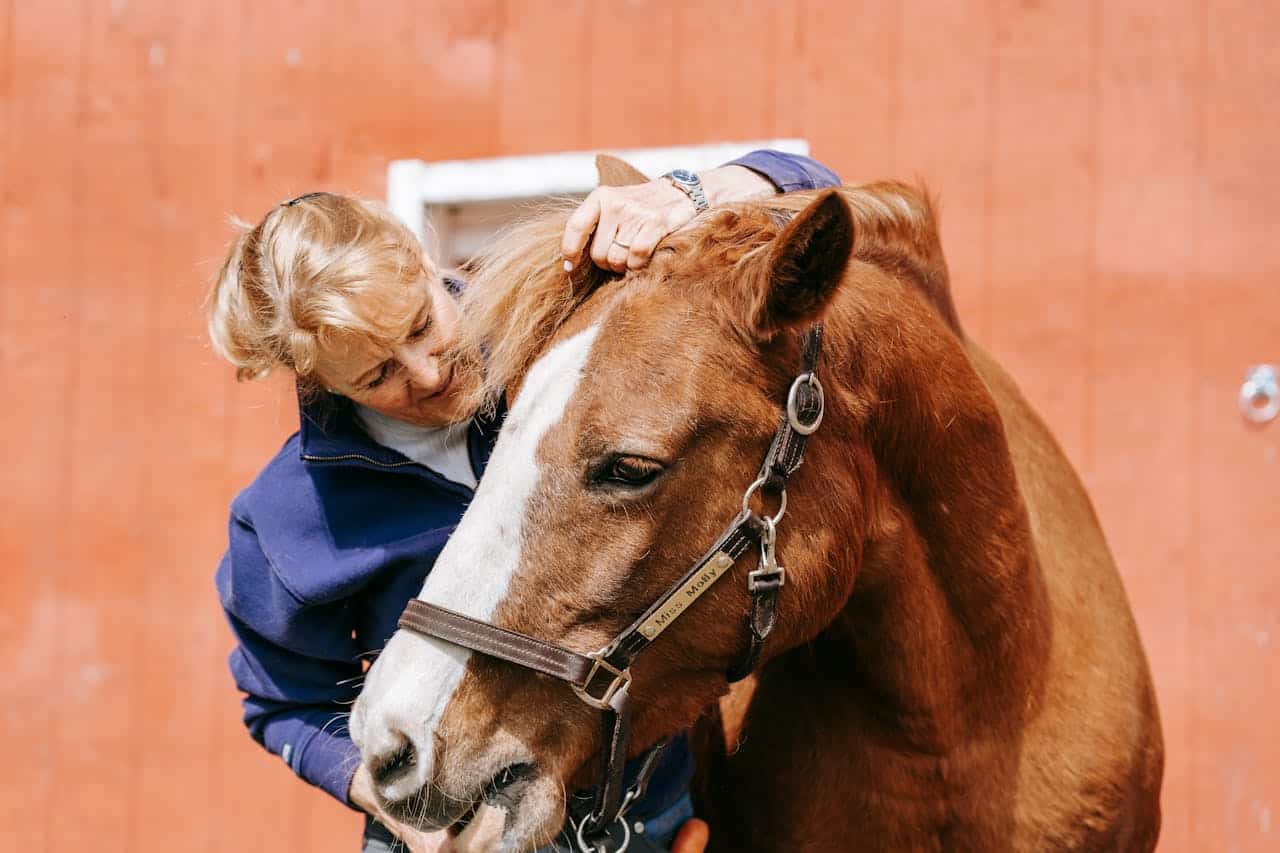
Equine therapy research demonstrates moderate evidence for treating PTSD and trauma, with promising results for anxiety and depression when conducted by licensed mental health professionals using evidence-based therapeutic interventions alongside horses.
Most people dismiss horses as therapy partners until they see the science. Equine therapy research reveals measurable improvements in PTSD, anxiety, and depression - but the evidence isn't what you'd expect. Here's what decades of studies actually show about healing with horses.
What is equine-assisted therapy (and related terms)
Equine-assisted therapy (EAT) is a broad category of therapeutic interventions that involve horses and are guided by licensed mental health professionals. Unlike a casual trail ride or a riding lesson at your local stable, these sessions are structured around specific therapeutic goals. A trained clinician facilitates the experience, using interactions with horses to help you work through emotional challenges, build coping skills, or process difficult experiences.
You might come across several related terms that sound similar but mean different things. Equine-assisted activities (EAA) is a more general term that includes recreational or educational programs involving horses. These can be valuable, but they don’t necessarily involve a mental health professional or focus on therapeutic outcomes. Think of EAA as the umbrella that covers everything from therapeutic riding lessons to horse grooming programs at summer camps.
Equine-assisted psychotherapy (EAP) is more specific. In EAP, a licensed therapist works directly with you and a horse to address mental health goals like reducing anxiety, processing trauma, or improving emotional regulation. The horse becomes an active participant in the therapeutic process, not just a backdrop for conversation.
Why horses make effective therapy partners
Horses bring something unique to the therapeutic setting. As prey animals, they’ve evolved to be extraordinarily sensitive to their environment and the emotional states of those around them. They pick up on subtle shifts in your body language, breathing patterns, and energy that you might not even notice yourself.
This sensitivity creates a powerful mirror effect. If you’re feeling anxious or tense, a horse often responds in kind, giving you immediate, honest feedback about your emotional state. Horses are also highly social animals that live in herds with complex dynamics. Working with them can reveal patterns in how you relate to others, set boundaries, or respond to stress.
Types of equine therapy: EAP, hippotherapy, therapeutic riding, and EAL
Not all horse-based therapies are the same. Each type serves different goals, involves different professionals, and works best for different people. Understanding these distinctions helps you find the right fit for your specific needs.
Equine-Assisted Psychotherapy (EAP)
Equine-Assisted Psychotherapy pairs you with both a horse and a licensed mental health professional. The focus here is on emotional and psychological goals: processing trauma, managing anxiety, building self-awareness, or working through relationship patterns.
Most EAP sessions happen on the ground rather than in the saddle. You might lead a horse through obstacles, groom it, or simply observe its behavior and reflect on what comes up for you emotionally. The therapist guides these experiences using trauma-informed principles and evidence-based techniques. Because a licensed clinician is always present, EAP can address clinical mental health conditions like PTSD, depression, and anxiety disorders.
Hippotherapy
Hippotherapy uses the natural movement of a horse to achieve physical, occupational, or speech therapy goals. The word comes from the Greek “hippos,” meaning horse.
A licensed healthcare professional, such as a physical therapist, occupational therapist, or speech-language pathologist, directs these sessions. The horse’s rhythmic gait provides sensory input and challenges the rider’s balance, posture, and coordination. Hippotherapy is often used for children and adults with cerebral palsy, developmental delays, or neurological conditions. The focus is primarily physical and sensory rather than emotional or psychological.
Therapeutic riding and Equine-Assisted Learning
Therapeutic riding offers adaptive horseback riding instruction for people with disabilities. Certified riding instructors, not therapists, lead these sessions. The goals center on learning riding skills, building confidence, and enjoying recreation. While participants often experience emotional benefits, therapeutic riding isn’t designed to treat mental health conditions.
Equine-Assisted Learning takes a different path entirely. EAL focuses on education and personal development rather than therapy. Schools use it to teach teamwork and communication skills. Corporations bring employees to work with horses for leadership training. These programs can be powerful learning experiences, but they don’t include a clinical mental health component and aren’t meant to replace therapy.
Knowing which type you’re considering matters. If you’re seeking support for a mental health concern, EAP with a licensed therapist is the modality designed for that purpose.
How equine therapy works for mental health
Unlike traditional talk therapy, equine therapy engages your body and emotions in real time. Horses are highly attuned to the people around them, picking up on subtle shifts in breathing, muscle tension, and heart rate. This creates a unique therapeutic environment where your internal state becomes visible through the horse’s responses.
Horses as living mirrors
When you approach a horse feeling anxious or scattered, the horse often becomes restless or moves away. When you’re calm and grounded, the horse typically relaxes and draws closer. This immediate, nonverbal feedback acts like a biofeedback system. You don’t have to explain how you’re feeling because the horse shows you. For people who struggle to identify or articulate their emotions, this can be revelatory. The horse’s honest reactions bypass the stories we tell ourselves and reflect what’s actually happening in our nervous system.
Regulation through connection
Horses have a naturally calm, rhythmic nervous system. Standing near a relaxed horse, grooming one, or simply breathing alongside them can help your own stress response settle. This process, called co-regulation, is the same mechanism that helps infants calm down when held by a caregiver.
For people dealing with anxiety, trauma, or chronic stress, this experience of borrowing calm from another living being can be profoundly healing. It teaches your body what regulation feels like, similar to how mindfulness practices help you return to the present moment.
Learning by doing
Equine therapy is experiential, meaning you learn through action rather than discussion alone. Leading a horse through an obstacle, setting boundaries with a curious animal, or building trust over multiple sessions creates real skills you can transfer to human relationships. Research demonstrates comparable effectiveness to other therapeutic approaches, with participants showing improvements in resilience, self-efficacy, and social and emotional skills. Caring for a large animal requires presence, patience, and consistent boundaries, and these qualities naturally develop through the work itself.
Metaphors that reveal patterns
Interactions with horses often mirror how you relate to people. Someone who struggles with boundaries might let a horse push into their space. A person who fears vulnerability might keep physical and emotional distance. These patterns emerge organically, giving you and your therapist concrete material to explore together.
Mental health benefits and conditions treated
Equine-assisted therapy has shown promise across a wide range of mental health conditions. While research continues to grow, therapists and clients alike report meaningful improvements in symptoms and overall wellbeing.
PTSD and trauma
Veterans and survivors of abuse represent some of the most-studied populations in equine therapy research. Horses respond to subtle shifts in body language and emotional states, which can help people with PTSD become more aware of their own stress responses. The nonverbal nature of horse interactions can feel safer for those who struggle to verbalize traumatic experiences. Many participants report feeling a sense of control and empowerment they had lost after trauma.
Anxiety and depression
For people experiencing anxiety, horses offer powerful grounding effects. Grooming, leading, or simply standing near a horse requires present-moment focus, which naturally interrupts anxious thought patterns. People living with depression often benefit from the physical activity involved, along with the sense of accomplishment that comes from caring for another living being. The genuine connection formed with a horse can combat feelings of isolation and numbness.
Addiction and substance use
Equine therapy helps people in recovery build healthy coping mechanisms outside of substance use. Working with horses requires emotional honesty, since these animals respond to what you’re actually feeling rather than what you’re trying to project. This feedback helps people develop greater emotional awareness and learn to regulate difficult feelings without turning to substances.
Autism, developmental conditions, and eating disorders
Children and adults on the autism spectrum often experience improvements in social skills, sensory integration, and communication through horse interactions. For those with eating disorders, equine therapy promotes body awareness and a healthier relationship with self. The physical experience of riding and caring for horses reconnects people with their bodies in a nonjudgmental setting.
General benefits across conditions
Regardless of specific diagnosis, participants commonly report improved self-esteem, better emotional regulation, stronger interpersonal skills, and increased mindfulness. These benefits often extend well beyond the therapy session itself.
What the research actually shows: evidence quality by condition
Equine-assisted therapy has gained significant attention from researchers over the past two decades. The evidence base varies considerably depending on the condition being treated, the type of intervention, and the population studied. Here is an honest look at what the science currently supports.
PTSD and trauma
Research on equine-assisted interventions for PTSD shows moderate evidence, particularly among veteran populations. Multiple randomized controlled trials have demonstrated meaningful reductions in trauma symptoms, with participants reporting decreased hypervigilance, improved emotional regulation, and better sleep quality. The effect sizes in these studies tend to be moderate rather than dramatic. Veterans often respond well to the structured, nonverbal nature of horse work, which can feel less threatening than traditional talk therapy. Still, researchers note that replication across diverse populations and settings remains necessary before drawing firm conclusions.
Depression and anxiety
For depression, several controlled studies show improvement in mood symptoms following equine-assisted programs. Participants often report feeling more motivated, connected, and hopeful. The challenge for researchers lies in isolating what specifically helps: is it the horses themselves, the outdoor environment, the physical activity, or the combination of all three?
Anxiety research remains in earlier stages, with promising but limited randomized trials. Physiological measures tell an interesting story here. Studies tracking cortisol levels and heart rate variability suggest that time with horses produces measurable calming effects in the body. These biological markers support what participants report feeling, though larger studies are needed to confirm these patterns.
Autism, addiction, and other conditions
Children and adolescents with autism represent the most studied pediatric population in equine therapy research. The evidence is moderate for improvements in social communication, eye contact, and sensory processing. Hippotherapy has a stronger evidence base for motor outcomes than for psychological ones.
For addiction and substance use disorders, the theoretical fit is compelling but rigorous research has been limited. One randomized controlled trial for substance use disorders found significant improvements in emotion regulation and self-efficacy among participants. Early research on equine-facilitated learning for youths with severe emotional disorders has also shown promise, though more studies are needed.
Eating disorder treatment programs have begun incorporating equine work, with small studies showing promising results for body awareness and emotional expression. This area needs considerably more research before strong claims can be made.
Understanding research limitations
Being honest about research quality matters when evaluating any therapy. Equine-assisted interventions face several methodological challenges that affect the strength of current evidence.
Sample sizes tend to be small, often under 50 participants. Many studies lack proper control groups, making it difficult to know whether improvements came from the horses or simply from receiving attention and care. Protocols vary widely between programs, so comparing results across studies becomes difficult.
Perhaps the biggest challenge is blinding. Unlike medication trials where participants don’t know if they received the real treatment, you obviously know if you’re working with a horse. This awareness can influence outcomes through expectation effects. Publication bias also plays a role, as studies showing positive results get published more readily than those showing no effect, potentially skewing our overall picture of effectiveness.
None of this means equine therapy doesn’t work. It means we should hold the evidence with appropriate nuance, recognizing where support is stronger and where questions remain. When comparing to evidence-based therapeutic approaches with decades of research behind them, equine-assisted therapy is still building its scientific foundation.
What to expect in equine therapy sessions
Knowing what happens during equine therapy can help ease any nervousness about trying something new. While each program has its own approach, most follow a similar progression that builds skills and confidence over time.
Sessions typically last 60 to 90 minutes and take place outdoors at a barn, ranch, or equine facility. You’ll want to wear closed-toe shoes, long pants, and weather-appropriate clothing you don’t mind getting a little dirty. The setting itself becomes part of the therapeutic experience, offering fresh air and a break from traditional office environments.
Early sessions: building foundation
Your first few sessions focus on creating safety and comfort. You’ll complete an assessment with your therapist to discuss your goals and what you hope to gain from the experience, and you’ll receive a thorough safety orientation covering how to move around horses, read their body language, and handle them respectfully.