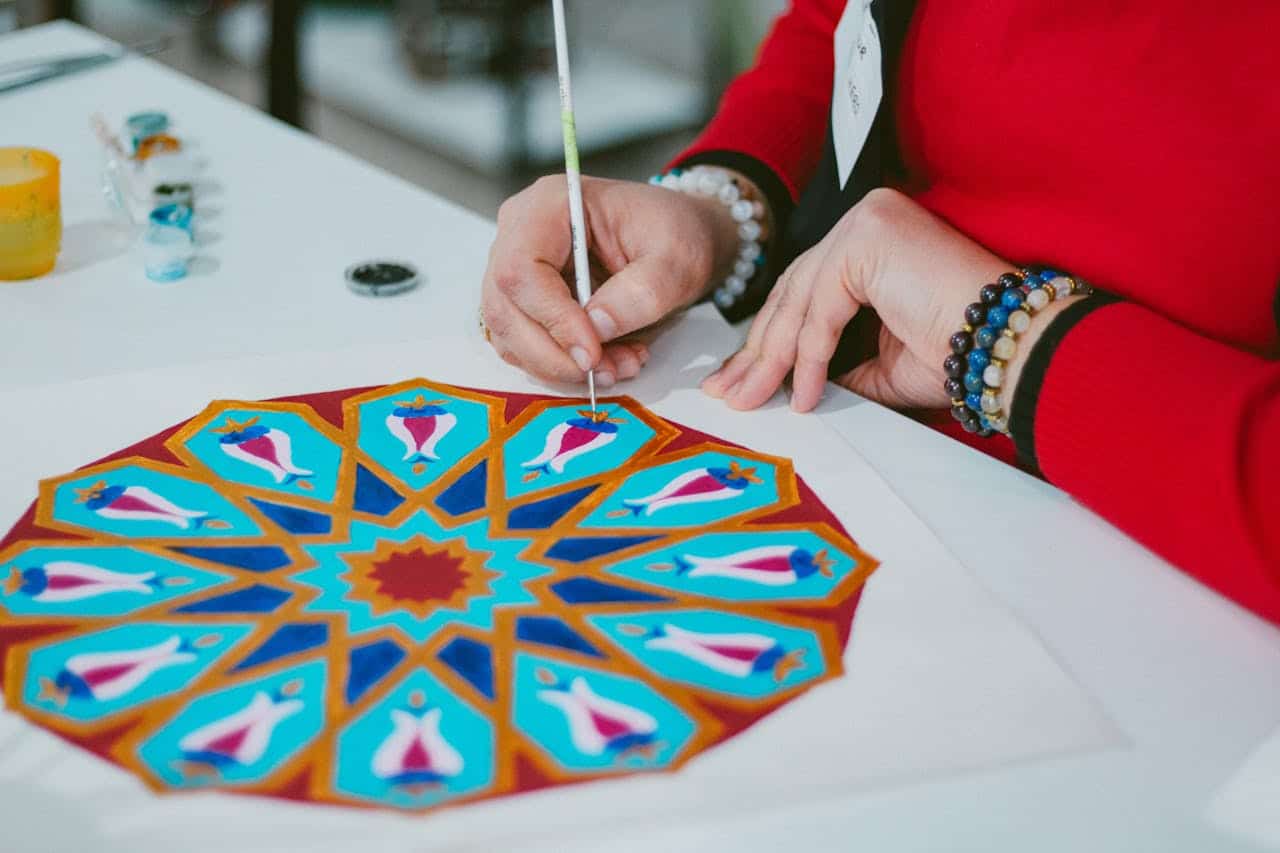
Art therapy research shows strongest evidence for treating trauma and PTSD through clinical interventions that combine creative expression with psychotherapy, with moderate support for depression, anxiety, and dementia when delivered by credentialed art therapists.
Most people think art therapy is just painting for relaxation, but rigorous research reveals it's a powerful clinical intervention with the strongest evidence for trauma recovery. Here's what actually works and what the science shows.
What is art therapy? Definition and core principles
Art therapy is a regulated mental health profession that combines creative expression with psychotherapy to support emotional healing and psychological growth. Unlike simply painting for relaxation or taking a pottery class, art therapy is a clinical intervention designed to treat mental health conditions and enhance quality of life. It is practiced by credentialed art therapists who hold graduate degrees and integrate psychological theory with artistic media like drawing, sculpture, collage, and other visual forms.
What sets art therapy apart from traditional approaches like cognitive behavioral therapy is its emphasis on non-verbal expression. Sometimes the most painful emotions, whether from trauma, grief, or anxiety, resist being put into words. Art therapy offers an alternative pathway. Through creating images and objects, you can access and process feelings that might otherwise stay buried or feel impossible to articulate in conversation.
Clinical intervention versus wellness activity
The distinction between art therapy and therapeutic art matters. Therapeutic art, sometimes called “art for wellness,” includes activities like adult coloring books or community painting nights. These can be enjoyable and stress-relieving, but they are not designed to address specific mental health conditions.
Art therapy, by contrast, involves assessment, treatment planning, and clinical goals. A trained art therapist observes not just what you create but how you create it: your choices, hesitations, and the meaning you assign to your work.
Directive and non-directive approaches
Art therapists tailor their methods to your needs. In directive art therapy, the therapist provides specific prompts or exercises aligned with treatment goals. You might be asked to draw a safe place or create a timeline of significant life events.
Non-directive art therapy gives you more freedom. The therapist creates a supportive environment while you lead the creative process, exploring whatever emerges naturally. Many therapists blend both approaches based on what serves you best in any given session.
How art therapy works: the therapeutic process
Art therapy sessions follow a thoughtful structure designed to help you feel safe, express yourself, and gain insight. While every therapist brings their own style, most sessions share common elements that make the experience both creative and clinically meaningful.
A typical session begins with a check-in. Your therapist might ask how you’re feeling, what’s been on your mind, or whether anything significant has happened since your last meeting. This brief conversation helps set the tone and often guides the creative work ahead.
The art-making phase comes next, usually taking up the largest portion of your time together. You might draw, paint, sculpt with clay, create collages, or even work with digital media. The materials available vary by therapist and setting, but the goal remains consistent: giving you a way to express what words alone can’t capture.
Here’s something that surprises many people: you don’t need any artistic skill to benefit from art therapy. The focus is entirely on the process of creating and what emerges from it, not on making something that looks polished or beautiful. A stick figure drawing can be just as therapeutically valuable as a detailed painting.
After creating, you and your therapist move into reflection and processing. This is where meaning-making happens. Your therapist might ask open-ended questions about your artwork, notice patterns or symbols, and help you connect what you’ve created to your thoughts, feelings, or experiences. They are trained to observe without judgment and guide you toward insights at your own pace.
Treatment length depends on your specific needs and goals. Some people benefit from brief interventions lasting six to twelve sessions, while others engage in ongoing therapy over months or years. Sessions can happen one-on-one, in groups with others working on similar challenges, or even with family members when relationship dynamics are part of the focus.
Why art therapy works: neurobiological and psychological mechanisms
Art therapy isn’t just a creative outlet. It works because it engages specific brain systems and psychological processes that talk therapy alone may not reach. Understanding these mechanisms helps explain why art therapy shows particularly strong results for certain conditions.
Trauma and right-brain processing
Traumatic experiences are stored differently than ordinary memories. While everyday events get processed through the left brain’s verbal and logical systems, trauma often bypasses these pathways entirely. Instead, traumatic memories lodge in the right hemisphere as sensory fragments: images, body sensations, and emotional impressions without clear narratives attached.
This explains why people with traumatic disorders often struggle to talk through their experiences. The memories simply aren’t stored in verbal form. Art therapy offers a different entry point. When you draw, paint, or sculpt, you’re engaging the same right-brain systems where traumatic material is stored, allowing for processing that doesn’t require putting everything into words first.
Creative engagement also activates the parasympathetic nervous system, your body’s natural calming response. Research on art-based interventions and health outcomes has documented how creative activities can reduce cortisol levels and lower stress responses. For someone whose nervous system has been stuck in high alert, this physiological shift creates the safety needed for deeper therapeutic work.
The act of creating something tangible also provides what therapists call externalization. When an internal experience becomes a painting or sculpture outside of you, it creates psychological distance. You can literally step back, look at it from different angles, and gain perspective that feels impossible when the experience remains trapped inside.
Dementia and procedural memory preservation
Dementia progressively damages declarative memory, the system that stores facts, names, and recent events. Procedural memory, which handles learned skills and automatic actions, often remains intact much longer. This is why someone with advanced dementia might not recognize family members yet can still play a familiar song on the piano.
Art therapy leverages this preserved capacity. The motor skills involved in painting, drawing, or working with clay tap into procedural memory systems. People who once enjoyed art can often reconnect with these abilities even when other cognitive functions have declined significantly, providing genuine self-expression when verbal communication has become difficult.
Developmental pathways in children
Children naturally communicate through imagery and play long before they develop verbal fluency. Asking a young child to describe complex emotions in words often leads to frustration or silence. But hand that same child crayons and paper, and they’ll show you exactly what they’re feeling.
Art therapy works with this developmental reality rather than against it. The sensory experience of working with materials also helps ground children in the present moment, which proves especially valuable for those experiencing anxiety or dissociation. Squishing clay, feeling paint between fingers, or tearing paper creates immediate physical feedback that anchors attention to the here and now.
Evidence strength by condition: where research is strongest
Not all mental health conditions have the same depth of research supporting art therapy. Understanding where the evidence is strongest can help you make informed decisions about whether this approach might work for your specific situation.
Strong evidence: trauma and childhood behavioral issues
The most robust research supports art therapy for PTSD and trauma-related conditions. Multiple randomized controlled trials (RCTs), the gold standard in clinical research, have demonstrated medium-to-large effect sizes for trauma symptoms. Meta-analyses pooling data from several studies consistently show meaningful improvements in trauma processing and symptom reduction.
Children experiencing emotional and behavioral difficulties also benefit from strong research support. Art therapy appears particularly well-suited for young people who struggle to verbalize complex feelings, giving them alternative pathways to communicate distress and work through difficult experiences.
Moderate evidence: depression, anxiety, and dementia
Research on art therapy for depression shows consistent benefits, though effect sizes vary more widely between studies. RCTs demonstrate that people experiencing depression often report improved mood and reduced symptoms after art therapy interventions. A literature review on art therapy for mental disorders found positive symptom reduction across depression, anxiety, and cognitive impairment.
For anxiety disorders, the evidence is similarly encouraging but less uniform. Studies show reductions in anxiety symptoms, though research designs and intervention types differ considerably. People living with dementia represent another area of moderate evidence, with studies focusing on quality of life improvements rather than symptom reversal. Art therapy helps maintain engagement, reduce agitation, and preserve a sense of identity.
Emerging evidence: newer areas of research
Several conditions show promising early results but need more rigorous investigation. These include eating disorders, substance use disorders, chronic pain, and autism spectrum conditions. Initial studies suggest benefits, but the research often involves smaller sample sizes and fewer replicated trials.
Understanding research limitations
Even in areas with stronger evidence, art therapy research faces challenges. Many studies have relatively small participant groups, making it harder to generalize findings. Follow-up periods are often short, leaving questions about long-term benefits. The interventions themselves vary widely, from structured protocols to open-ended creative sessions, which complicates direct comparisons. Recognizing these limitations helps set realistic expectations while still acknowledging the genuine benefits research has documented.
Art therapy for PTSD and trauma: the strongest evidence base
Among all mental health applications, art therapy shows its most compelling research support for treating post-traumatic stress disorder and trauma-related conditions. The evidence here is genuinely robust, with multiple studies demonstrating meaningful, measurable improvements in trauma symptoms.
Meta-analyses examining art therapy for trauma consistently report medium-to-large effect sizes, typically ranging from d = 0.5 to 0.8. To put that in perspective, an effect size of 0.5 means the average person receiving art therapy improved more than 69% of those who did not receive treatment. These numbers place art therapy alongside many established therapeutic approaches for trauma.
The development of Trauma-Focused Art Therapy (TFAT) represents a significant advancement in this field. This structured protocol was specifically designed for treating PTSD, integrating art-making with evidence-based trauma treatment principles. TFAT follows a phased approach that aligns with broader trauma-informed care frameworks: establishing safety, processing traumatic material, and reconnecting with daily life.
Why art therapy works for trauma
Trauma often defies words. Many people with PTSD struggle to verbalize their experiences, either because the memories feel too overwhelming or because the trauma occurred before they had language to describe it. Art therapy sidesteps this barrier entirely.
The mechanisms that make art therapy effective for trauma include its ability to bypass avoidance, one of the core symptoms of PTSD. When someone draws or paints a traumatic memory, they engage with it indirectly. This creates what clinicians call “titrated exposure,” meaning the person can approach difficult material at a pace they control. The artwork also provides containment, giving overwhelming emotions a concrete form that exists outside the body.
Populations showing the strongest response
Art therapy proves particularly effective for groups who face barriers to traditional talk therapy. Children who experienced early trauma often lack the developmental capacity to process their experiences verbally. Refugees may face language barriers or come from cultures where discussing trauma openly carries stigma. Combat veterans frequently struggle with the emotional vocabulary needed for conventional therapy.
Research with veterans has been especially encouraging. A randomized controlled trial on combat-related PTSD found that art therapy enhanced trauma processing, improved emotional access, and helped veterans achieve healthy psychological distancing from their experiences. Studies show reductions in PTSD Checklist scores that compare favorably with first-line treatments.
Art therapy can function as a standalone treatment or work alongside other evidence-based approaches. Many clinicians now integrate it with trauma-focused cognitive behavioral therapy or EMDR, using art-making to prepare clients for more intensive processing or to consolidate gains between sessions.
Art therapy for depression and anxiety: current research findings
Depression and anxiety are among the most common mental health conditions worldwide, and researchers have been studying whether art therapy can offer meaningful relief. The evidence so far is encouraging, though it comes with some important caveats worth understanding.
For depression, randomized controlled trials have shown significant reductions in depressive symptoms when comparing art therapy to waitlist controls. The effect sizes are moderate, typically ranging from 0.3 to 0.5, which is comparable to what some pharmacological interventions achieve. This suggests art therapy can be a legitimate treatment option, not just a pleasant activity.