Collective grief occurs when communities process shared mourning after disasters, tragedies, or cultural losses, creating unique emotional and physical symptoms that require community-based healing approaches, therapeutic support, and evidence-based interventions to restore resilience and foster post-traumatic growth.
Have you ever felt genuine sadness for strangers affected by tragedy, or found yourself crying over news footage of people you've never met? This response isn't weakness or oversensitivity - it's collective grief, and understanding how it works can help you navigate these overwhelming feelings with greater compassion for yourself.
What Is Collective Grief? Understanding Shared Loss
Collective grief occurs when a community, nation, or cultural group experiences shared mourning over a loss that affects the group’s identity. Unlike the private pain of losing a loved one, collective grief unfolds in public spaces. It ripples through neighborhoods, workplaces, social media feeds, and entire societies as people process a loss together.
The defining feature of collective grief is its social nature. When a tragedy strikes, you’re not mourning alone in your living room. You’re witnessing others process the same event, seeing their reactions, and feeling connected through a shared emotional experience. This creates a unique form of grief that is both deeply personal and communal at the same time.
How Collective Grief Differs from Individual Grief
Individual grief typically centers on a personal relationship with someone who died. You knew them, loved them, and now must navigate life without them. Collective grief, by contrast, emerges from events that impact many people simultaneously. The loss might be physical, like lives lost in a disaster, or symbolic, like the end of a cultural era.
The social dimension changes how grief unfolds. You might find yourself processing feelings alongside strangers who share your sense of loss. Public memorials, vigils, and online communities become spaces where people gather to make sense of what happened. This shared processing can create powerful feelings of solidarity, but it also adds layers of complexity. Not everyone relates to the event the same way, and that can lead to tension about how to grieve appropriately.
Examples of Collective Grief in Communities
Collective grief takes many forms across different types of losses. Natural disasters like hurricanes, wildfires, and earthquakes leave entire communities mourning lost homes, neighborhoods, and lives. These events often involve traumatic disorders as people process both personal trauma and shared community devastation.
Mass violence creates another form of collective grief. School shootings, terrorist attacks, and acts of hate violence send shockwaves far beyond those directly affected. Entire cities, states, or nations may feel the impact as the event challenges collective feelings of safety and belonging.
Pandemics represent a global form of collective grief, where millions simultaneously mourn lost lives, missed milestones, and changed ways of living. Cultural losses also spark collective mourning. When beloved public figures die or significant cultural institutions close, communities grieve the loss of shared symbols and meaning. These losses might seem less tangible than physical tragedies, but they still create real grief as people process what the loss means for their collective identity.
What Does Collective Grief Feel Like? Recognizing the Emotional and Physical Symptoms
Collective grief doesn’t always announce itself clearly. You might find yourself crying over news footage of people you’ve never met, or feeling an unexpected wave of sadness when a song plays on the radio. These reactions are normal responses to shared loss, even when the event didn’t touch your life directly.
The emotional weight of collective grief often shows up as profound sadness that seems to settle over everything. You might feel angry at the injustice of what happened, or helpless because you can’t fix it. Many people experience anxiety symptoms about future events, wondering if something similar could happen again. Guilt appears in different forms too: survivor’s guilt if you were spared, or confusion about why you don’t feel more affected when everyone around you seems devastated.
Your mind might struggle to process collective grief in ways that feel unfamiliar. Concentration becomes difficult when intrusive thoughts keep pulling you back to the tragedy. You might find yourself compulsively checking news updates, unable to look away even when the coverage makes you feel worse. Some people describe a sense of unreality, as if they’re watching events unfold from behind glass, disconnected from their usual emotional responses.
Your body registers collective grief too, even when you’re not consciously thinking about the loss. Fatigue settles in without explanation. Sleep becomes elusive or disrupted by unsettling dreams. Your appetite might disappear completely or drive you toward comfort foods. You could notice a heightened startle response, jumping at sudden noises that wouldn’t normally faze you. Headaches, muscle tension, and stomach problems often appear without clear medical causes.
One of the most confusing aspects of collective grief is feeling genuine sorrow for strangers or events far removed from your daily life. You might question whether your feelings are valid, wondering if you have the right to grieve when others were more directly affected. This doubt itself becomes another layer of the grief experience, adding confusion to an already complex emotional response.
The Neuroscience of Shared Mourning: Why Collective Grief Affects Your Brain and Body
When tragedy strikes a community, your brain doesn’t just observe the pain around you. It actually experiences it. The biological mechanisms underlying collective grief explain why shared loss can feel so overwhelming and why processing it alongside others creates such powerful effects.
Mirror Neurons Create Empathic Resonance
Your brain contains specialized cells called mirror neurons that fire both when you experience something and when you watch someone else go through it. When you see a neighbor crying at a memorial or watch footage of survivors embracing, these neurons activate the same neural pathways as if you were experiencing that grief directly. This creates what scientists call empathic resonance, a literal neurological overlap between your pain and theirs.
This mechanism explains why scrolling through social media after a tragedy can feel emotionally exhausting. Your brain processes each image, each story, each expression of anguish as if it were happening to you. The boundaries between your grief and others’ grief blur at a neural level.
Your Brain Processes Social Pain Like Physical Injury
The sting of collective loss isn’t just metaphorical. Research shows that the same brain regions activate during emotional pain as during physical pain. Your anterior cingulate cortex and insula light up whether you stub your toe or witness your community reeling from disaster.
This overlap in the social pain network means your nervous system treats collective grief as a genuine threat. You might notice physical symptoms: tightness in your chest, difficulty sleeping, changes in appetite. Your body responds to shared loss with the same stress hormones it would release if you were physically injured.
Trauma Bonding Creates Unexpected Community Cohesion
Shared traumatic experiences trigger the release of oxytocin, often called the bonding hormone. This neurochemical response explains why communities often report feeling closer after tragedy, even as they struggle with grief. The biology of trauma bonding drives people to seek connection, creating the spontaneous support networks that emerge after disasters.
You might find yourself talking to strangers at vigils or feeling unusually connected to people you barely know. This isn’t weakness or dependency. It’s your nervous system doing exactly what it evolved to do: building social bonds that increase survival during threatening times.
Group Rituals Activate Unique Neurochemical Pathways
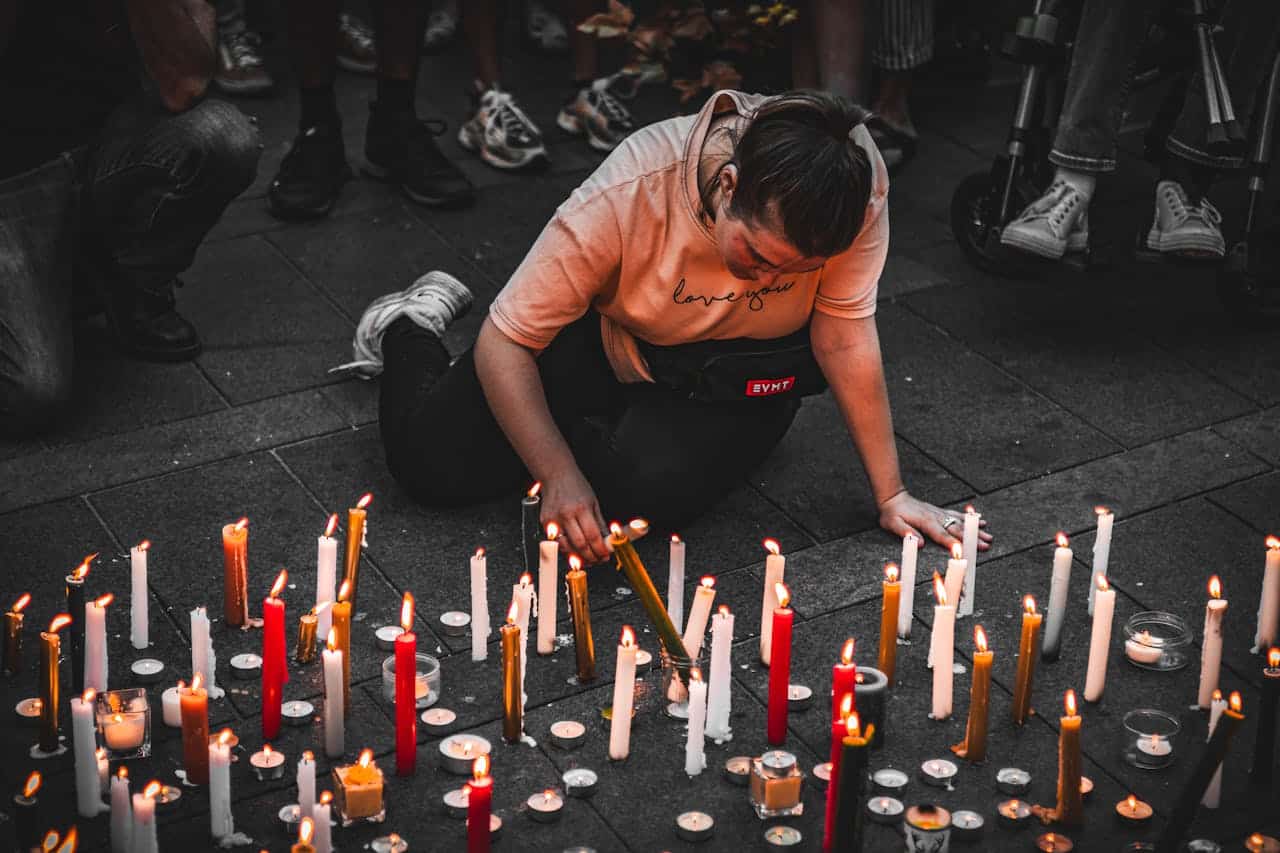
When you participate in collective mourning rituals like candlelight vigils, memorial services, or moments of silence, something remarkable happens in your brain. Synchronized activities create neurochemical responses that solitary grieving cannot replicate. Moving together, breathing together, and focusing attention together activates reward centers and releases endorphins.
This explains why group rituals have persisted across every human culture. Your brain is wired to find comfort in synchronized mourning. The act of processing grief alongside others literally changes your neurochemistry, reducing stress hormones and increasing feelings of connection and safety.
Collective Trauma Can Dysregulate Entire Communities
When trauma affects a whole community, it can create widespread nervous system dysregulation. You might notice that everyone around you seems on edge, or conversely, emotionally numb. This shared hypervigilance or collective numbness isn’t coincidence. Trauma affects the autonomic nervous system, and when an entire community experiences it simultaneously, the effects ripple through social networks.
This community-wide dysregulation can persist long after the initial event. Your nervous system takes cues from the people around you, so if your community remains in a state of heightened alert, your own system may struggle to return to baseline. Understanding this biological reality helps explain why collective grief often requires community-level healing approaches, not just individual support.
How Different Types of Tragedy Require Different Community Responses
Not all collective grief looks the same. The way a community processes loss after a hurricane differs dramatically from how it responds to a mass shooting or the death of a beloved public figure. Understanding these distinctions helps communities mobilize the right kind of support at the right time, rather than applying a one-size-fits-all approach to vastly different experiences.
Natural Disasters: Grief Meets Survival
When floods, earthquakes, or hurricanes strike, communities face an immediate collision of emotional and practical needs. You’re grieving what you’ve lost while simultaneously figuring out where to sleep tonight and how to access clean water. This dual reality creates a unique processing pattern where rebuilding physical infrastructure becomes inseparable from emotional healing.
Natural disasters often come with clearer recovery timelines. There’s a before, a during, and an after. Communities can see progress as roads reopen, homes get rebuilt, and normalcy gradually returns. This visible forward movement provides psychological scaffolding that other types of collective grief lack. The shared work of reconstruction also serves a powerful emotional function, transforming helplessness into agency as neighbors help neighbors clear debris and rebuild.
Mass Violence: When Humans Cause the Harm
Collective grief following mass shootings, terrorist attacks, or other acts of human violence carries a fundamentally different weight. When another person deliberately causes harm, the grief becomes entangled with anger, fear, and a shattered sense of safety. Communities don’t just mourn what was lost but struggle with why someone chose to destroy it.
This type of tragedy often activates a need for justice that becomes part of the grieving process itself. Vigils may transform into protests. Memorial services may include calls for policy change. The political dimensions that emerge aren’t distractions from grief but integral to how communities make meaning from senseless violence. Processing this grief requires space for rage alongside sadness, and for collective action alongside quiet remembrance.
Pandemics: Prolonged Loss Without Closure
Pandemics create a particularly disorienting form of collective grief because they unfold slowly, without clear boundaries. Unlike a single catastrophic event, a pandemic means living with ongoing threat and accumulating losses over months or years. You’re grieving yesterday’s deaths while anticipating tomorrow’s, all while unable to gather for the communal rituals that typically help process loss.
The isolation that pandemics require directly contradicts what humans need for healthy grieving. You can’t hug at funerals. You can’t gather in large groups to share memories. This creates what researchers call ambiguous loss, where you’re mourning not just specific people but an entire way of life that disappeared without a clear ending point. Communities need extended support structures that acknowledge grief may resurface in waves long after the acute crisis passes.
Cultural and Symbolic Losses
When a beloved celebrity dies, a treasured institution closes, or a cultural landmark burns, communities experience real grief that may feel less legitimate than other forms. You might wonder if you have the right to feel devastated about someone you never met or a building you rarely visited. But these losses represent the death of shared identity markers, the symbols that helped define who we are collectively.
Cultural losses deserve recognition as genuine grief experiences. They represent the end of shared stories, the loss of future memories you expected to create, and sometimes the closing of a chapter in your community’s identity. The processing looks different here too: creating new rituals to honor what was, finding ways to preserve collective memory, and gradually building new symbols that can carry meaning forward.
How Communities Process Collective Grief: Rituals, Support, and Meaning-Making
When tragedy strikes a community, people instinctively come together to process their shared loss. These collective responses aren’t just cultural traditions. They’re essential mechanisms that help groups navigate overwhelming emotions, restore a sense of safety, and begin healing together.
The Power of Communal Rituals
Rituals create structured containers for grief when everything feels chaotic. Candlelight vigils, moments of silence, memorial services, and public gatherings give communities designated times and spaces to acknowledge loss together. These aren’t empty gestures. They serve profound psychological and physiological purposes.
When you stand with others in shared mourning, your nervous systems actually synchronize through a process called co-regulation. Your breathing patterns align, your heart rates stabilize, and the physical presence of others helps regulate your stress response. This is why being physically present at a memorial often feels more comforting than grieving alone, even when words feel inadequate.
Rituals also mark time and create transition points. Lighting candles on an anniversary, planting memorial gardens, or observing annual remembrance days help communities acknowledge that while life continues, the loss remains significant. These repeated practices keep memory alive without requiring constant acute grief.
Mutual Support and Bearing Witness
In the aftermath of shared loss, communities often organize spontaneous support networks that wouldn’t exist otherwise. Neighbors check on neighbors. Strangers organize meal trains for affected families. People create informal gathering spaces where others can simply show up and be together.
This mutual support serves multiple functions. Practically, it addresses immediate needs when systems feel overwhelmed. Emotionally, it counters the isolation that grief can create. When you help others while also receiving support, you experience both agency and connection, two things that trauma and loss often strip away.
Storytelling becomes particularly important during this phase. Sharing where you were when you heard the news, what you saw, how you felt creates a collective narrative that helps everyone process the experience. When you bear witness to someone else’s story, you validate their reality and help them feel less alone. This process of mutual witnessing is central to approaches like interpersonal therapy, which recognizes how relationships and social support shape our ability to process difficult emotions.
These conversations don’t require professional facilitation to be healing. Coffee shop gatherings, neighborhood walks, and informal check-ins all create opportunities for people to share their experiences and feel heard.
Finding Meaning Through Action
As acute grief begins to shift, many communities move toward meaning-making through collective action. This doesn’t mean the grief ends or that action eliminates the loss. Rather, it channels overwhelming emotions into purpose and honors those affected through tangible change.
You might see communities advocating for policy changes that address the conditions that led to the tragedy. Families of victims often become activists, transforming their personal loss into efforts to prevent similar events. Scholarship funds get established in victims’ names. Safety protocols get revised. New support systems get built.
This meaning-making serves several functions. It provides a sense of agency when people have felt powerless. It creates legacy and ensures that loss leads to something beyond pain. It also offers an ongoing relationship with grief, allowing people to honor their feelings through sustained engagement rather than forced closure.
Community leaders play a vital role throughout these processes. Faith leaders, teachers, elected officials, and other trusted figures help hold space for collective grief by acknowledging loss publicly, modeling healthy emotional expression, and creating opportunities for community connection. When leaders show up authentically, name what’s happening, and demonstrate that grief deserves time and attention, they give entire communities permission to grieve openly.
Cultural Approaches to Communal Mourning Around the World
Every culture has developed its own ways of holding grief collectively, and these traditions reveal different understandings of what loss means and how communities can support those who mourn. Looking across cultures shows us that there’s no single right way to grieve together. What matters is creating space for both individual pain and shared healing.
Indigenous Ceremonies Connect Grief to Land and Ancestry
Many Indigenous communities approach mourning as something that involves the entire community, the natural world, and ancestral spirits. These ceremonies often take place over extended periods and include rituals that honor both the person who died and the collective loss the community experiences. Grief isn’t separated from daily life but woven into it through songs, dances, and gatherings that acknowledge the connection between past, present, and future generations. The land itself often plays a central role, as places hold memory and provide grounding during times of loss. These practices recognize that individual grief and community grief are inseparable.
Jewish Shiva Brings the Community to the Bereaved
The Jewish tradition of shiva structures the first seven days after a death with clear expectations for both mourners and their community. Rather than expecting grieving family members to reach out for support, the community comes to them. Visitors bring food, sit with the bereaved, share memories, and simply be present. Mirrors are covered, mourners sit on low chairs, and normal routines pause to make space for grief. This practice removes the burden of maintaining appearances or managing logistics during the most intense period of loss. The structure itself becomes a form of support, telling mourners exactly what’s expected and surrounding them with consistent presence.