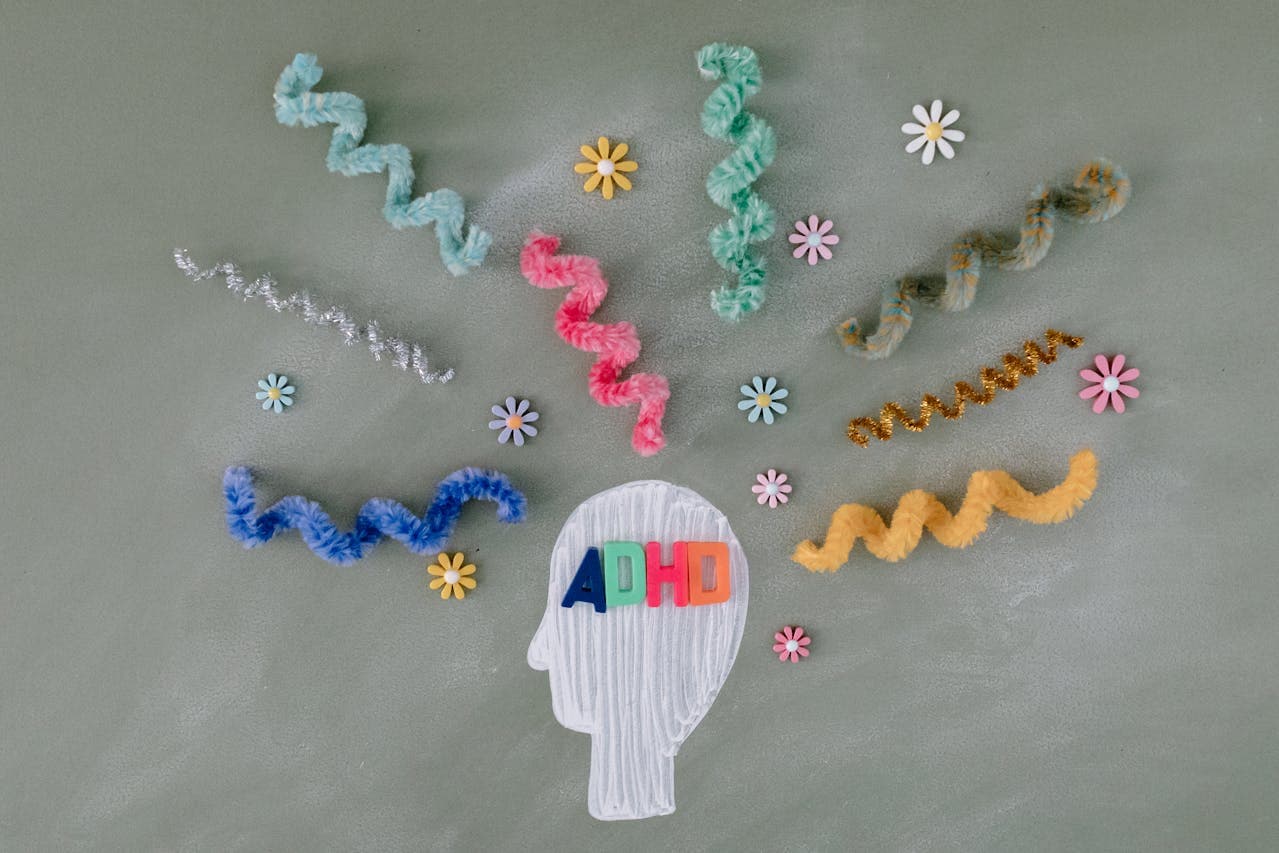
ADHD types include seven distinct patterns identified through brain imaging research, each requiring specific therapeutic approaches ranging from cognitive behavioral therapy for anxious presentations to acceptance and commitment therapy for overfocused symptoms, helping individuals find targeted treatment strategies with professional support.
What if your ADHD doesn't fit the textbook description? Dr. Daniel Amen's research reveals seven distinct ADHD types, each with unique brain patterns that explain why standard treatments work for some people but leave others frustrated and searching for answers.
Who is Dr. Daniel Amen?
Dr. Daniel Amen is a board-certified psychiatrist and brain disorder specialist who has spent decades studying how the brain influences behavior, mood, and attention. His work challenges traditional approaches to diagnosing ADHD, which typically rely on symptom checklists and behavioral observations alone.
Amen founded the Amen Clinics, a network of psychiatric facilities with locations across the United States. What sets these clinics apart is their use of SPECT brain imaging, a technology that measures blood flow and activity patterns in the brain. By analyzing these scans, Amen and his team can see how different regions of the brain function during concentration, rest, and various mental tasks.
Over the course of his career, Amen Clinics has performed more than 200,000 brain scans. This massive database of brain images became the foundation for Amen’s theory that ADHD isn’t a single condition but rather a collection of distinct subtypes, each with its own brain activity pattern.
Amen has shared his findings through bestselling books, including Healing ADD and Change Your Brain, Change Your Life. These works translate complex neuroscience into practical strategies for people looking to understand their own minds better. His 7-type ADHD framework emerged from patterns he observed across thousands of SPECT scans, offering a more nuanced view of attention difficulties than the standard diagnostic categories.
While his methods have sparked debate in the psychiatric community, Amen’s work has introduced many people to the idea that brain function plays a central role in attention and focus challenges.
The science behind SPECT scans and the 7-type framework
Traditional ADHD diagnosis relies on observing behaviors and checking symptoms against a list. You describe what you’re experiencing, and a clinician matches those experiences to criteria in the DSM-5, which recognizes three subtypes: predominantly inattentive, predominantly hyperactive-impulsive, and combined presentation. This approach focuses entirely on what’s happening on the outside.
Dr. Daniel Amen took a different route. He wanted to see what was happening inside the brain itself.
His tool of choice is SPECT imaging, which stands for Single Photon Emission Computed Tomography. Unlike an MRI that shows brain structure, SPECT measures blood flow and activity patterns across different brain regions. Areas with healthy activity light up in certain ways, while regions that are underactive or overactive show distinct patterns.
Over several decades, Amen and his team analyzed tens of thousands of these brain scans from people with attention difficulties. What they found challenged the conventional three-subtype model. The scans revealed that people with similar behavioral symptoms often had very different patterns of brain activity. Some showed underactivity in the prefrontal cortex, the area responsible for focus and impulse control. Others displayed overactivity in the limbic system, which governs mood and emotional responses.
By linking these distinct brain function patterns to specific symptom clusters, Amen developed his 7-type framework. Each type corresponds to a particular combination of brain activity patterns and the symptoms they produce. This approach suggests that what looks like one condition on the surface may actually have multiple underlying causes, each potentially responding better to different interventions.
The 7 types of ADHD according to Dr. Daniel Amen
Dr. Amen’s framework breaks ADHD into seven distinct types, each with its own brain activity patterns and behavioral characteristics. Understanding these differences can help you recognize which type, or combination of types, best describes your experience. Keep in mind that some people show features of more than one type.
Type 1: Classic ADD
This is what most people think of when they hear ADHD. People with Classic ADD are inattentive, easily distracted, and often disorganized. They may lose things frequently, struggle to follow through on tasks, and have difficulty staying seated or waiting their turn.
Hyperactivity is a hallmark of this type. You might notice restlessness, fidgeting, or an almost constant need to move. Children with Classic ADD often get labeled as hyperactive or hard to manage in school settings.
According to Dr. Amen’s brain imaging research, Classic ADD shows low activity in the prefrontal cortex, especially during concentration. The prefrontal cortex helps regulate attention, impulse control, and organization. When this area is underactive, focusing becomes a constant uphill battle.
Type 2: Inattentive ADD
Inattentive ADD shares some features with Classic ADD but without the hyperactivity component. People with this type tend to be quiet, daydreamy, and easily distracted. They may appear spacey or seem like they’re in their own world.
Low motivation and chronic procrastination are common struggles. You might find yourself starting projects with enthusiasm only to lose steam quickly. Tasks that require sustained mental effort feel exhausting.
This type often goes undiagnosed, especially in girls and women, because there’s no disruptive behavior to draw attention. The brain pattern is similar to Classic ADD: low prefrontal cortex activity during tasks that require focus. The difference is that the underactivity doesn’t trigger hyperactive compensation.
Type 3: Overfocused ADD
People with Overfocused ADD have trouble shifting their attention from one thing to another. They tend to get stuck on negative thoughts or behaviors and may worry excessively. Flexibility feels nearly impossible.
You might recognize this type if you hold grudges, get locked into arguments, or obsess over things that have gone wrong. Transitions are particularly difficult, whether it’s switching tasks at work or adjusting to changes in routine.
The brain pattern here is different from the first two types. Dr. Amen found overactivity in the anterior cingulate gyrus, the brain’s gear shifter. When this area works too hard, the brain gets stuck in loops instead of moving smoothly between thoughts and activities.
Type 4: Temporal Lobe ADD
Temporal Lobe ADD combines core attention problems with issues related to the temporal lobes, which sit on the sides of the brain. These areas handle memory, emotional stability, and learning.
People with this type may experience memory problems, mood instability, and quick temper flashes. Learning difficulties are common, and you might struggle with reading comprehension or remembering what you’ve just heard. Some people report feelings of déjà vu or periods of confusion.
Dr. Amen’s imaging shows abnormalities in the temporal lobes alongside the typical low prefrontal cortex activity. This combination can make this type particularly challenging because attention problems mix with emotional volatility.
Type 5: Limbic ADD
Limbic ADD blends attention difficulties with symptoms that look like depression. People with this type often experience low-grade sadness, negativity, and decreased energy. Social isolation and feelings of hopelessness are common.
Unlike typical depression, these symptoms often start in childhood and remain fairly constant rather than coming in episodes. You might feel unmotivated, struggle with low self-esteem, and find it hard to see the positive side of situations.
The brain pattern shows overactivity in the deep limbic system, the emotional center of the brain, combined with low prefrontal cortex activity. This overlap with mood disorders is why Limbic ADD can be tricky to identify. Standard stimulant medications sometimes make mood symptoms worse for this type.
Type 6: Ring of Fire ADD
Ring of Fire ADD is one of the most intense types. People with this pattern are extremely distractible, angry, irritable, and overly sensitive to their environment. Sensory overload is a frequent problem.
You might recognize this type if you feel like your brain is always on, cycling through thoughts rapidly and reacting strongly to sounds, lights, or textures. Mood swings can be dramatic, and oppositional behavior is common.
Dr. Amen named this type for what he saw on brain scans: a ring of patchy overactivity across the entire brain. Instead of underactivity in the prefrontal cortex, there’s too much activity everywhere. This pattern often responds poorly to stimulant medications, which can increase the overactivity and make symptoms worse.
Type 7: Anxious ADD
Anxious ADD combines attention problems with significant anxiety. People with this type feel tense, nervous, and often predict the worst possible outcomes. Physical symptoms like headaches, stomachaches, and muscle tension are common.
You might freeze in situations that require performance, like tests or public speaking. The fear of judgment or failure can be paralyzing. Social situations may feel overwhelming, and you might avoid new experiences to prevent anxiety symptoms from flaring up.
The brain pattern shows high activity in the basal ganglia, the brain’s anxiety center, alongside low prefrontal cortex activity. This combination creates a cycle where anxiety interferes with focus, and poor focus increases anxiety. Stimulant medications alone can sometimes worsen anxiety for people with this type.
Which type are you? A self-reflection guide
After reading through the seven types, you might already feel a pull toward one or two that sound familiar. That’s a good starting point. Most people with ADHD identify with one primary type but recognize features of others in themselves, too. This overlap is normal and doesn’t mean the framework isn’t useful for you.
The goal here isn’t to diagnose yourself. Instead, it’s to gather insights you can bring to a professional who can help you understand what’s really going on.
Think about what disrupts your life most
Start by asking yourself: which symptoms cause the most problems in my daily life? Maybe you’ve always struggled with focus, but what really derails you is the anxiety that kicks in whenever you sit down to work. Or perhaps procrastination isn’t your issue, but explosive frustration is costing you relationships.
Pay attention to your emotional patterns, not just your focus issues. Do you tend toward low moods? Racing thoughts? Irritability that seems to come out of nowhere? These emotional symptoms often get overlooked in ADHD conversations, but they’re central to several of Amen’s types.
Look back at your childhood
ADHD doesn’t appear in adulthood. If a type fits you now, you should be able to trace similar patterns back to childhood, even if they looked different then. The anxious kid who couldn’t stop worrying about tests might be the same adult who now spirals before work presentations. The child who daydreamed through class might still struggle with mental fog and motivation.
Reflecting on these early experiences can help you see the through-line in your symptoms.
Use this as a conversation starter
Self-reflection is valuable, but it has limits. You might identify strongly with Limbic ADD, for example, only to discover through professional evaluation that depression is a separate condition occurring alongside your ADHD. Or you might learn that what feels like anxiety is actually a nervous system response to years of unmanaged attention challenges.
Write down what resonates with you. Note specific examples from your life. Then bring those observations to a clinician who can help you sort through what’s ADHD, what might be something else, and what treatment approach makes the most sense for your brain.
When types overlap: understanding complex ADHD presentations
If you’ve read through the seven types and found yourself nodding along to more than one description, you’re not alone. Many people with ADHD show characteristics of two or three types simultaneously. This isn’t a flaw in the framework. It reflects the genuine complexity of how brains work.
Some combinations appear more frequently than others. People often experience anxiety alongside overfocused tendencies, creating a pattern where worry locks onto specific thoughts and won’t let go. Limbic ADD commonly overlaps with the Inattentive type, where low mood and motivation compound concentration difficulties. Ring of Fire ADD, with its widespread brain overactivity, can include features of nearly any other type.
When multiple types are present, identifying your primary type matters most. This is typically the pattern causing the greatest impairment in your daily life, the one that shows up most consistently across different situations. Treatment usually starts by addressing this dominant pattern first.