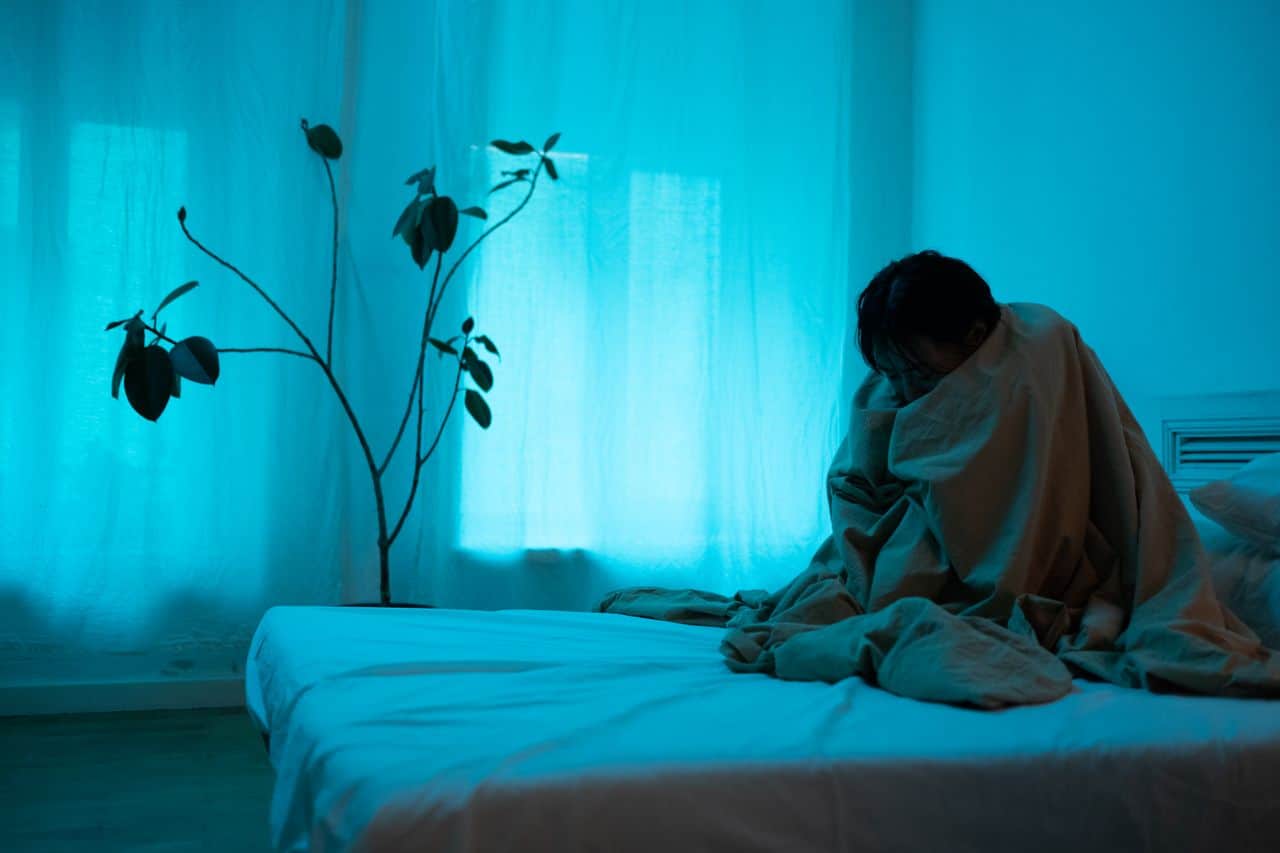
Monday morning anxiety is a clinically recognized, biology-driven stress response involving measurable HPA axis activation, cortisol surges, and sleep architecture disruption that compounds from Sunday afternoon through the night, and evidence-based therapeutic approaches including CBT and ACT give working adults targeted, stage-specific strategies to meaningfully reduce this predictable weekly dread cycle.
What you feel on Sunday night is not weakness, overthinking, or a bad attitude. Monday morning anxiety is a measurable biological cascade, your HPA axis activating, cortisol rising, and your nervous system bracing for a week that hasn't started yet. The biology is real, and so are the solutions.
What is Monday morning anxiety?
Monday morning anxiety is a recurring pattern of anticipatory dread and physiological arousal that surfaces specifically around the transition from weekend rest to workweek demands. It is not simply feeling groggy or unmotivated on a Monday. It is a distinct stress response, one that can show up as a racing heart, disrupted sleep, tight chest, or a sense of impending overwhelm, all before the week has even started.
It helps to separate this from two things people often confuse it with. The first is general morning anxiety, which can strike on any day of the week and is tied more broadly to waking cortisol spikes or an underlying anxiety condition. The second is the casual “Monday blues,” a phrase that implies low mood or reluctance, but without the physiological arousal that defines a true anxiety response. Monday morning anxiety sits in its own category: it is time-specific, anticipatory, and tied to a predictable weekly trigger.
This distinction matters because Monday morning anxiety is not a personality quirk or a sign of weakness. Research points to measurable HPA-axis dysregulation linked to Monday-specific anxiety, meaning the hypothalamic-pituitary-adrenal axis, the brain-body system that regulates your stress hormones, responds differently at the start of the workweek. The biology is real. Anxiety disorders affect nearly 1 in 5 U.S. adults annually, and Monday morning anxiety often exists on a spectrum with those broader clinical patterns.
Surveys consistently place Sunday evening and Monday morning as the peak anxiety window for working adults, which tells you this experience is widely shared. Understanding where it falls within the full range of anxiety symptoms is the first step toward addressing it with the seriousness it deserves.
Symptoms of Monday morning anxiety
Monday morning anxiety is not just a vague sense of dread. It shows up in your body, your thoughts, and your behavior, often well before the alarm goes off. Recognizing these patterns is the first step toward understanding that what you are experiencing has a name and a clinical basis.
Physical and autonomic symptoms
Your body often sounds the alarm before your mind fully registers the worry. Common physical signs include an elevated resting heart rate, shallow or tight breathing, and chest tension that can feel unsettling if you do not know what is causing it. Many people also notice nausea or general gastrointestinal distress on Sunday evenings, along with muscle tension that tends to concentrate in the jaw and shoulders. These are physical and emotional symptoms of anxiety that clinicians recognize as part of the anxiety response. They overlap significantly with the physical effects of stress that accumulate across the body when the nervous system stays on alert.
Sleep is another major signal. Difficulty falling asleep Sunday night, waking earlier than usual, or restless sleep that leaves you exhausted by Monday morning are all disrupted sleep patterns linked to anxiety, not just bad luck with your schedule.
Cognitive and emotional symptoms
On the cognitive side, Monday anxiety often looks like racing thoughts about the week ahead. You might find yourself mentally rehearsing difficult conversations, catastrophizing a project deadline, or replaying potential problems on a loop. Concentrating on a Sunday evening movie or meal becomes surprisingly hard when your brain is already three days ahead.
Emotionally, the experience tends to include a low-grade dread that builds through the afternoon, irritability that feels disproportionate to what is actually happening, and sometimes a genuine sadness or tearfulness by evening. A sense of feeling trapped in routine, or quiet resentment toward the week before it even begins, is more common than most people admit.
Behavioral patterns that signal Monday anxiety
Behavior often reveals what emotions struggle to name. Procrastinating Sunday tasks, doom-scrolling through your phone, or deliberately staying up late to stretch the weekend are all avoidance strategies the anxious mind uses to delay the inevitable. Putting off Monday preparation, like packing a bag or planning your morning, can feel like rest but usually amplifies the anxiety waiting on the other side of midnight.
The Sunday-to-Monday stress cascade: what your body does hour by hour
Sunday anxiety does not arrive all at once. It builds in stages, each one compounding the last, until Monday morning feels less like the start of a new week and more like the aftermath of a storm. Understanding the biology behind this cascade, hour by hour, can help you see that what you are experiencing is a measurable physiological sequence.
Stage 1: Anticipatory HPA activation (late Sunday afternoon)
Around 5 to 7 PM on Sunday, something shifts. You might notice a vague restlessness creeping in, even if nothing specific has happened. That feeling has a biological origin: your brain has already registered that the weekend is ending, and the hypothalamic-pituitary-adrenal axis (HPA axis) has begun a low-grade stress response. The HPA axis is the body’s central stress command system, linking the brain to the adrenal glands to regulate cortisol and other stress hormones.
As this system activates, cortisol and norepinephrine levels begin a slow climb. At the same time, your prefrontal cortex, the part of the brain responsible for planning and decision-making, starts running what researchers call “if-then” simulations. You are mentally rehearsing Monday scenarios: the inbox, the meeting, the conversation you have been putting off. Circadian regulation by the suprachiasmatic nucleus, the brain’s internal clock, plays a key role here, as it begins priming the HPA axis ahead of an anticipated high-demand day.
Stage 2: Parasympathetic withdrawal (Sunday evening)
By 7 to 10 PM, the nervous system balance tips further. The parasympathetic nervous system, often called the “rest and digest” system, begins to lose ground to the sympathetic “fight or flight” system. Vagal tone, a measure of how well the vagus nerve regulates calm and recovery, starts to decrease. Heart rate variability, which reflects the body’s flexibility in switching between stress and rest states, drops noticeably.
This is why Sunday evenings can feel oddly hollow. You might be watching something you enjoy, but relaxation feels just out of reach. The body’s ability to access a genuine relaxation response is being actively suppressed by rising sympathetic activity. This is a core feature of the broader stress response that shapes the entire Sunday-to-Monday cascade.
Stage 3: Sleep architecture disruption (Sunday night)
From roughly 10 PM through 2 AM, the compounding stress biology begins to interfere with sleep itself. Sleep onset latency, meaning how long it takes to actually fall asleep, increases. When sleep does arrive, the first REM cycle, the phase tied to emotional memory processing, is often delayed or fragmented.
Deep slow-wave sleep, the most physically and emotionally restorative stage, is also reduced. This matters because slow-wave sleep is when the brain processes the emotional residue of the previous day and prepares regulatory capacity for the next. Less of it means you wake up with a diminished ability to manage stress, before Monday has even technically begun.
Stages 4 and 5: Premature cortisol awakening and Monday morning transition
Between 3 and 6 AM, the cortisol awakening response (CAR) fires. The CAR is a natural, healthy surge of cortisol that occurs in the first 30 to 45 minutes after waking, designed to mobilize energy for the day. On workday mornings, research shows the CAR is significantly amplified compared to weekend mornings, and on Mondays it often activates earlier than the body’s usual rhythm. The same circadian cortisol mechanisms that prime the HPA axis on Sunday evening appear to accelerate this response when the brain anticipates high social or occupational demands.
By 6 to 9 AM, all five stages converge. Poor sleep, elevated cortisol, reduced vagal tone, and hours of anticipatory thinking have stacked on top of each other. Then the context cues arrive: the alarm tone, the commute, the first notification. Each of these has been conditioned, through repetition, to signal stress. Your nervous system does not need Monday to be objectively hard. It has already learned to treat the cues themselves as threats.
This peak anxiety window is real, it is measurable, and it is the product of biology, not character.
Your wearable already proves it: reading your Sunday night HRV and heart rate data
You may not need a therapist to tell you that Sunday nights feel different. Your smartwatch might already be logging the proof.
What your HRV data is actually telling you
HRV stands for heart rate variability, which is the variation in time between each of your heartbeats. A higher HRV generally means your nervous system is relaxed and adaptable. A lower HRV signals that your sympathetic nervous system, your body’s stress-response system, has taken over. When your HRV drops, your body is bracing for something.
That drop is exactly what many people see on Sunday nights.
How to spot the Sunday pattern in your own data
Open your wearable’s app and pull up your nightly data for the past few weeks. Compare your Sunday night readings to your Wednesday night readings, which tend to be your most neutral baseline of the week. The pattern most people find is consistent:
- HRV: 5 to 15% lower on Sunday nights than midweek
- Resting heart rate: 3 to 8 BPM higher than your Wednesday baseline
- Sleep score: noticeably lower, even if total sleep time looks similar
- Time to fall asleep: longer, often by 20 to 40 minutes
This works whether you use an Apple Watch, Oura Ring, Whoop, or Fitbit. The specific numbers vary by device, but the directional pattern tends to hold.
One important note: this is not a diagnostic tool. No wearable can tell you whether you have an anxiety disorder or any other condition. What the data can do is validate your experience. Seeing a measurable, repeatable physiological shift on Sunday nights makes the feeling undeniable, and for many people, that clarity is the first step toward doing something about it.
No wearable? The pattern still shows up
Mood tracking apps can capture the same pattern subjectively. Logging a simple 1 to 10 mood rating each evening and morning for two to three weeks often reveals the same Sunday dip without any sensors required. If you do not have a wearable, create a free ReachLink account to start tracking your mood each evening and morning. Over a few weeks, the Sunday-Monday pattern often becomes unmistakable on its own.
How to manage Monday morning anxiety: strategies that work with your biology
Generic advice like “just relax on Sunday” misses the point entirely. Because Monday morning anxiety follows a predictable biological cascade, the most effective strategies are ones that target each stage at the right time. Think of it less like a to-do list and more like a timeline of small interventions.
Sunday afternoon and evening: calming the HPA axis before it peaks
Stage 1 of the anxiety cascade begins with your brain running threat-simulation loops about the week ahead. One of the most effective ways to interrupt this is a brief, low-stakes Monday preview. Spend about 10 minutes in the afternoon writing down your top priorities for the next day, nothing elaborate, just enough to give your prefrontal cortex a sense of control. When your brain has a rough map of what Monday looks like, it has less reason to keep scanning for danger.
As Sunday evening arrives and Stage 2 begins, your goal shifts to activating the parasympathetic nervous system, the branch of your autonomic nervous system responsible for rest and recovery. Slow diaphragmatic breathing with an extended exhale, breathing in for four counts and out for six or eight, directly stimulates the vagus nerve, which acts as a brake on your stress response. Cold water face immersion has a similar effect. A 20-minute evening walk is another well-supported option that does not require any equipment or special routine.
Sunday night: protecting your sleep architecture
By the time Stage 3 arrives, your body’s stress hormones are already beginning to shift your sleep structure. The single most protective thing you can do is maintain a consistent sleep and wake time across the weekend. Sleeping in significantly on Saturday and Sunday creates what researchers call social jet lag, a misalignment between your internal clock and your actual schedule that makes Sunday night sleep harder to come by.
Alcohol is worth reconsidering here as well. Even moderate drinking within 48 hours of Monday disrupts REM sleep, the deep, restorative stage your brain needs most. Limiting screens for at least 60 minutes before bed reduces blue light exposure, which suppresses melatonin and delays sleep onset.
Monday morning: working with the cortisol surge
Stages 4 and 5 bring the cortisol awakening response, a natural spike in stress hormones that peaks within 30 to 45 minutes of waking. Rather than fighting it, you can channel it. Getting natural sunlight within 30 minutes of waking helps anchor your circadian rhythm and supports a cleaner cortisol curve. Brief physical movement, even a short walk or five minutes of stretching, gives that cortisol somewhere productive to go.
One of the most impactful changes you can make is delaying your first inbox check by 30 to 60 minutes. Your email and calendar are conditioned context cues, meaning your brain has learned to associate them with stress. Reaching for them immediately after waking reinforces that association before you have had a chance to regulate.
Breaking the dread loop over time
The conditioned fear response that makes Sunday evenings feel heavy does not disappear overnight, but it can be weakened. The principle behind this comes from graduated exposure, a core technique in cognitive behavioral therapy, which involves deliberately pairing anxiety-triggering cues with neutral or positive experiences over time. In practice, this might mean consistently doing something you enjoy on Monday mornings: a specific coffee ritual, a playlist you like, or a short walk before work. Over four to six weeks of repetition, your amygdala, the brain’s threat-detection center, begins to update its prediction. Monday stops being a reliable signal for dread and starts becoming something more neutral.
When Monday anxiety is more than the blues: when to seek professional help
Feeling a knot in your stomach on Sunday night does not automatically mean something is clinically wrong. Monday anxiety that fades by midday, once the week gets moving, falls within the normal range of the stress response. Your nervous system anticipated a threat, mobilized resources, and then recalibrated once the perceived danger passed. That is the system working as designed.
The picture changes when the anxiety does not recalibrate.
Red flags worth taking seriously
Certain patterns suggest your nervous system is stuck in a loop that goes beyond ordinary work stress. Consider reaching out to a professional if you recognize any of the following:
- Anxiety that persists past Monday and bleeds into Tuesday or beyond, even when work is going reasonably well
- Physical symptoms that are intensifying week over week, such as worsening headaches, chest tightness, or gastrointestinal distress
- Sleep disruption spreading to multiple nights, not just Sunday, so that the cortisol spike is now a near-nightly event
- Expanding avoidance behaviors, including calling in sick to escape the feeling, or beginning to dread other days of the week the same way you dread Monday
- Thoughts of self-harm or suicidal ideation — if this applies to you, please contact the 988 Suicide and Crisis Lifeline by calling or texting 988
Monday anxiety, GAD, and burnout: why the distinction matters
These three experiences can look similar from the inside but call for different approaches in treatment. Monday morning anxiety is often conditioned and situational, tied to a specific trigger and context. Generalized anxiety disorder (GAD), by contrast, requires at least six months of persistent, difficult-to-control worry across multiple life domains, accompanied by three or more symptoms such as fatigue, muscle tension, or concentration difficulties. Occupational burnout shares some physical overlap but is defined more by emotional exhaustion, depersonalization, and a reduced sense of accomplishment at work specifically. A licensed therapist can help you sort through which pattern fits your experience, and that distinction genuinely shapes what kind of support will be most effective.
What therapy actually does for anticipatory anxiety
Several evidence-based approaches are well matched to the conditioned, anticipatory nature of Monday anxiety. Cognitive behavioral therapy (CBT) helps you identify and restructure the thought patterns that amplify the Sunday cortisol spike. Acceptance and commitment therapy (ACT) teaches you to relate differently to anxious sensations rather than fighting them, which reduces the secondary anxiety that builds around the original feeling. Exposure-based protocols work directly with the conditioned fear response by gradually reducing the brain’s learned alarm reaction to Sunday-evening cues.
The biology covered throughout this article makes one thing clear: what you feel on Sunday night is a real physiological process, not a character flaw or a mindset failure. Professional support does not ask you to simply think more positively. It works with the same cortisol pathways, nervous system responses, and conditioned patterns described here, giving your body and brain new information to update the cycle.
If your Sunday nights have become something you dread and your Monday symptoms are getting harder to shake, talking to a licensed therapist can help you understand what is driving the cycle. ReachLink offers a free assessment you can take at your own pace, with no commitment and no pressure. You can also learn more about what psychotherapy involves before taking any next step.
What You Are Feeling on Sunday Night Is Real
If you have spent years assuming that Sunday dread was just a personality flaw or a sign that you needed to toughen up, this article may have shifted something for you. The biology is not a metaphor. Your nervous system is genuinely running a threat response before the week has even begun, and that matters because it means there are real, targeted ways to work with it rather than simply push through it.
You do not have to keep white-knuckling your way through Sunday evenings alone. If the cycle has started to feel bigger than the strategies you have tried on your own, speaking with a licensed therapist can help you understand what is keeping it going. ReachLink offers a free assessment you can take at your own pace, with no commitment required, whenever you feel ready to take a closer look.
FAQ
-
Why do I feel so anxious every Sunday night even when nothing bad is happening at work?
Sunday night anxiety, sometimes called the "Sunday Scaries," is a very common experience where your body begins anticipating the stress of the upcoming week even before anything has actually gone wrong. Your nervous system is responding to a learned pattern - it has associated Monday mornings with pressure, deadlines, or discomfort, so it starts sounding the alarm in advance. This is a form of anticipatory anxiety, and it can feel disproportionate to your actual circumstances because it's rooted in habit and perception rather than an immediate threat. Recognizing that this response is a predictable pattern, not a reflection of something truly dangerous, is an important first step toward managing it.
-
Can therapy actually help with Sunday night anxiety or is it just something I have to live with?
Therapy can be genuinely effective for Sunday night anxiety, and it is not something you simply have to accept as part of your routine. Approaches like Cognitive Behavioral Therapy (CBT) help you identify and challenge the thought patterns that fuel anticipatory anxiety, while techniques like mindfulness and behavioral activation can help you restructure your Sunday evenings in ways that feel less dread-filled. A licensed therapist can also help you explore whether the anxiety is pointing to deeper concerns, like burnout, workplace stress, or a broader anxiety pattern that deserves attention. Many people find that with consistent therapy, Sunday nights shift from something they dread to something they can move through with far more ease.
-
Why does my body physically react on Sunday nights - like a tight chest or racing heart - even when I'm just relaxing?
The physical symptoms you feel on Sunday nights are your body's stress response activating in anticipation of perceived pressure ahead. Your brain does not clearly distinguish between a threat happening right now and one it is imagining in the near future, so it triggers the same fight-or-flight response, releasing stress hormones that raise your heart rate and tighten your muscles. This is especially common if you have experienced repeated stress on Monday mornings in the past, because your nervous system has essentially been conditioned to prepare for that stress in advance. Understanding that these physical sensations are a nervous system response, not a sign that something is truly wrong, can help reduce some of their intensity.
-
My Sunday anxiety is getting bad enough that I want to talk to someone - how do I find the right therapist?
If Sunday night anxiety is consistently disrupting your rest or affecting your quality of life, reaching out to a therapist is a solid and worthwhile step. ReachLink makes it straightforward to get started - you can take a free assessment, and then a human care coordinator (not an algorithm) will personally match you with a licensed therapist who fits your needs and situation. This human-led matching process means you are more likely to connect with someone who is a genuine fit, rather than being sorted by an automated system. From there, your therapist can work with you using evidence-based approaches like CBT or mindfulness-based therapy to address the anxiety at its root.
-
Is Sunday night anxiety a sign of something more serious, like an anxiety disorder?
For most people, Sunday night anxiety is a situational stress response rather than a diagnosable condition, but in some cases it can signal something worth exploring more deeply. If the anxiety is severe, happens consistently week after week, spills into other days, or significantly affects your sleep and wellbeing, it may be worth discussing with a therapist to better understand what is driving it. A licensed therapist can help you assess whether what you are experiencing is within the normal range of stress or whether it reflects a pattern that would benefit from structured therapeutic support. Either way, you do not need a formal diagnosis to seek help - if it is bothering you, that is reason enough to reach out.